
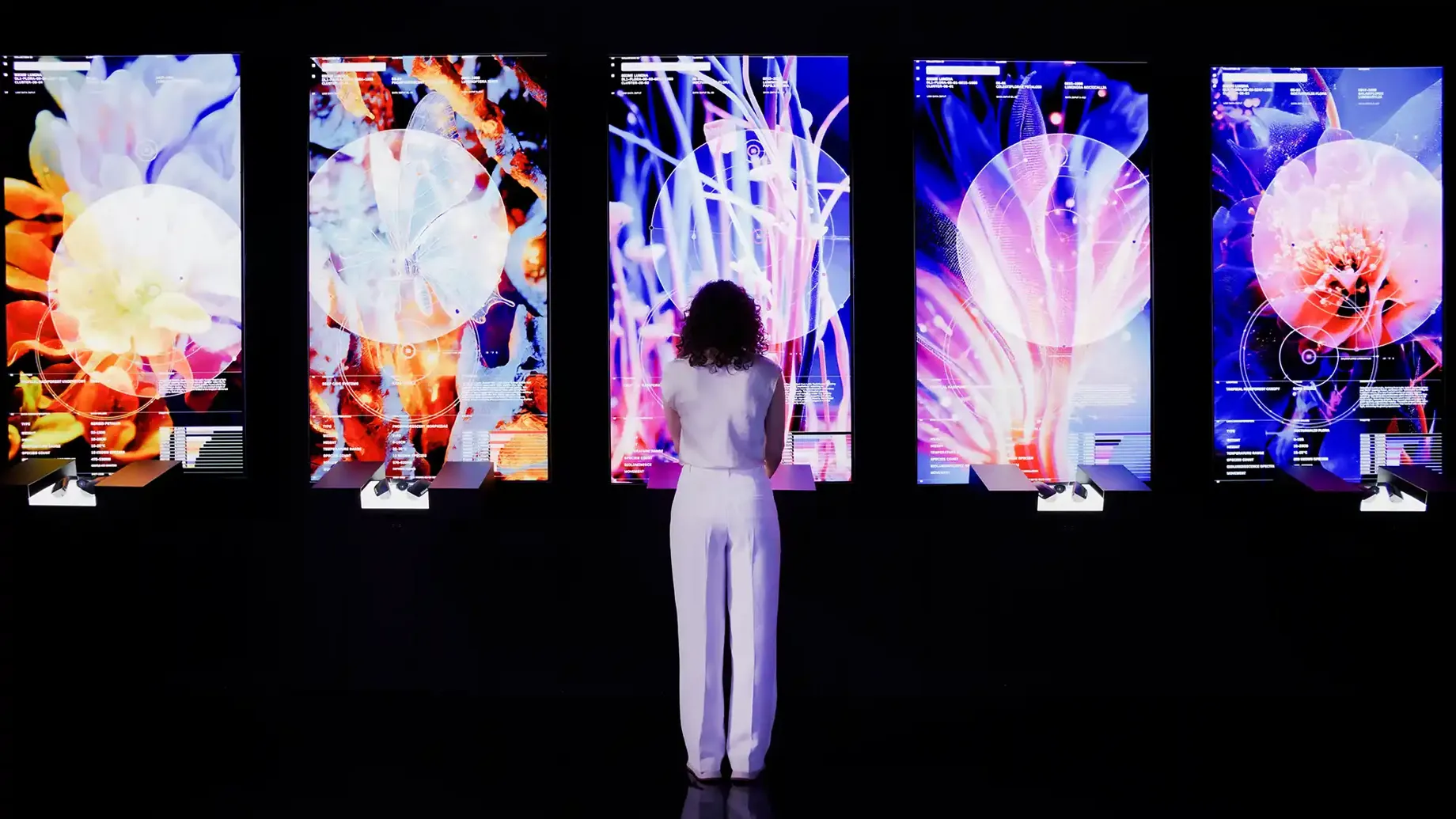
As the world’s first museum dedicated to AI Arts, Refik Anadol Studio sought to create an immersive digital ecosystem capable of delivering a unique, multisensory visitor experience. Because this meant transforming a space originally intended for retail, realizing this vision required tightly coordinated engineering and technology infrastructure to support complex AV, acoustics, environmental control, power, and data demands while translating Refik Anadol Studio’s artistic aspirations into a buildable immersive environment.
Arup served as the prime engineer and consultant, working closely with Refik Anadol Studio to translate Dataland’s generative, multi-sensory artworks into coordinated design solutions. We provided structural, mechanical, electrical, plumbing, IT, audiovisual, acoustics, lighting, owners rep, and security services to support the project’s AI-driven visitor experience. Gensler was the project architect.
Dataland offers a new model for cultural institutions in the digital age. By bringing multisensory exhibitions that utilize AI in a museum setting. Refik Anadol Studio is demonstrating how artistic ambition, advanced technology, and bespoke engineering can come together to create more immersive experiences.
Translating artistic ambition into immersive audiovisual solutions
As an early partner to Refik Anadol Studio, Arup served as the AV owner representative for Dataland, helping translate their artistic vision into a coordinated and buildable delivery strategy. In that role, the team directed and aligned the project’s technology systems, provided technical project management, and helped streamline decision-making between technology and architecture across the wider design team.
This role was especially important on a project defined by unusually complex technical demands which required deviation from traditional project delivery methods. Dataland includes uniquely challenging and highly customized embedded AV elements, including an all-LED infinity room, which required deep understanding and sophisticated coordination across the project team to realize Refik’s vision.
To help reduce delivery risk, Arup supported mock-ups and equipment trials with manufacturers, the AV contractor, and the client team to test the viability of the AV installation before implementation. This approach allowed the project team to understand what would be required to realize the experience at full scale, while supporting the seamless and immersive visitor environment Refik Anadol Studio was seeking to create.
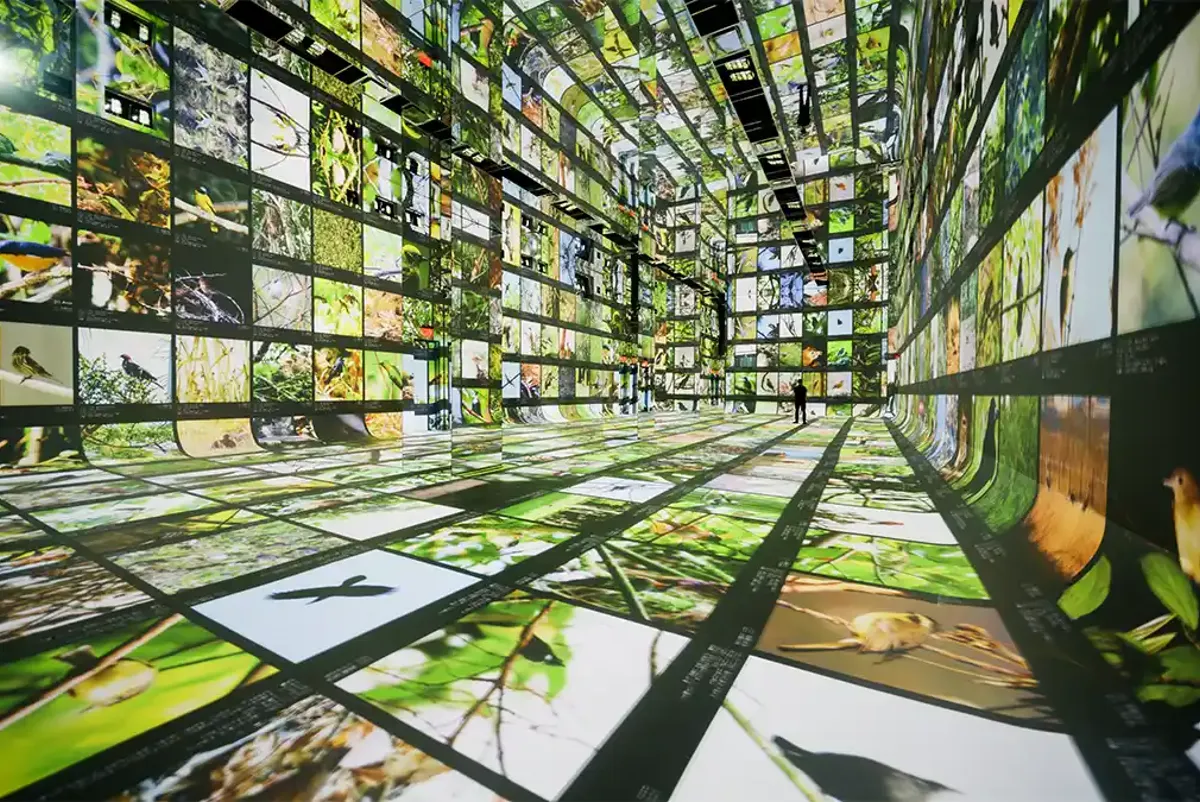
Dataland was defined by unusually complex technical demands which required deviation from traditional project delivery methods.
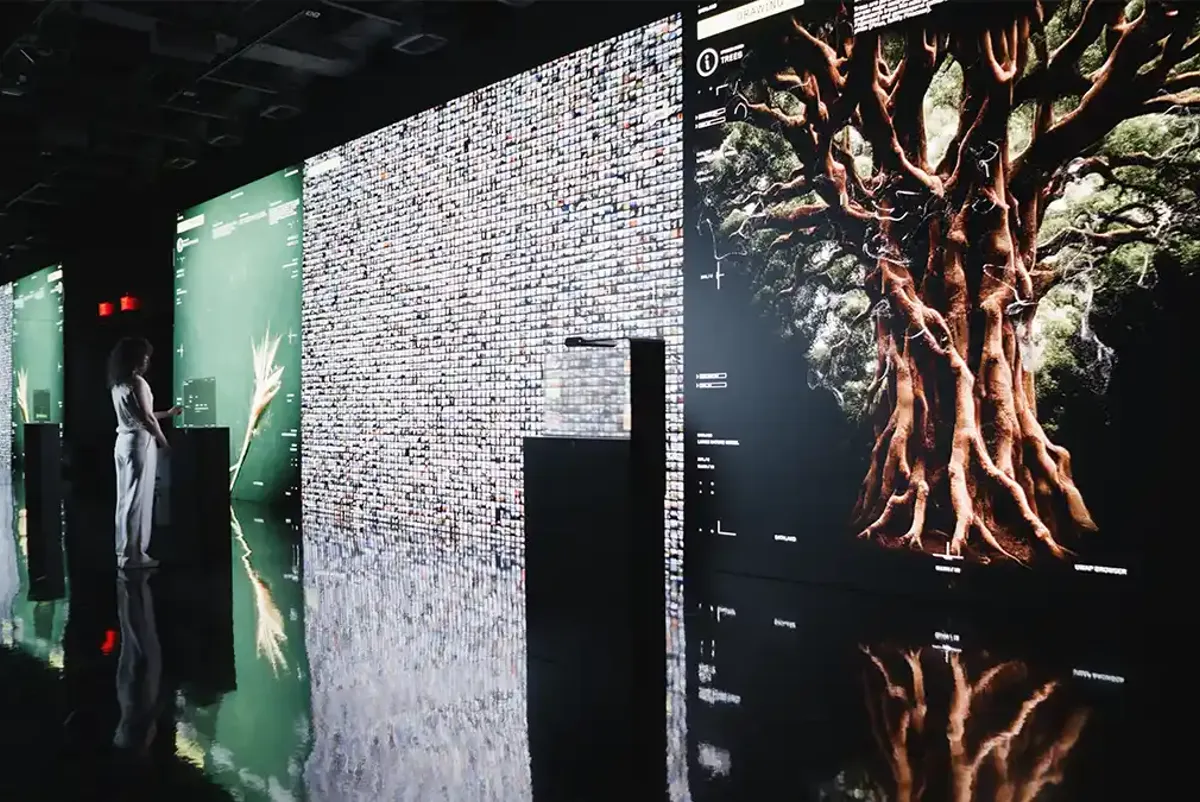
Arup’s MEP work was critical to accommodating the high technical-grade equipment required across the museum.
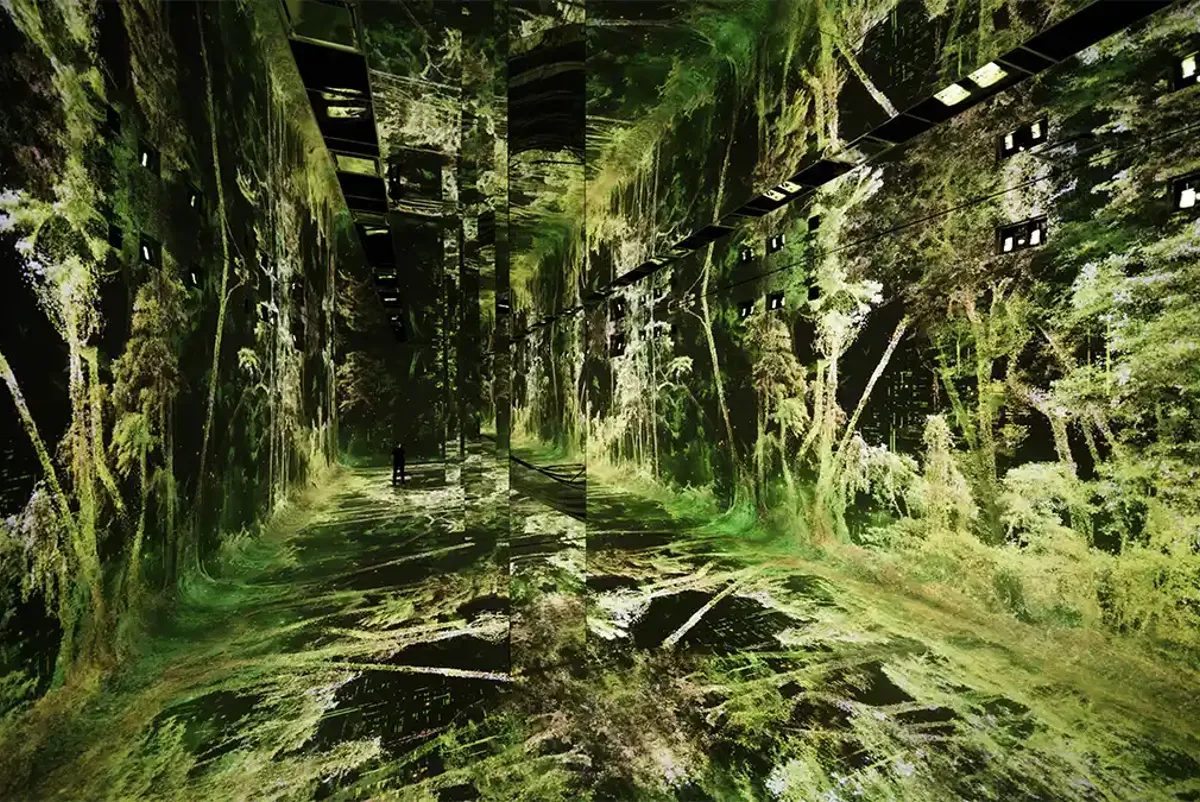
As part of the design team, Arup supported the seamless and immersive visitor environment Refik Anadol Studio was seeking to create.
Designing core infrastructure for a technically demanding cultural destination
To help transform the space into a 30-foot-high immersive museum environment, Arup provided structural, mechanical, electrical, and plumbing (MEP) engineering that could support the project’s unusually demanding technical and environmental requirements. The team developed engineering solutions to significantly augment building systems for projected imagery and environmental control, helping implement the infrastructure needed to realize the client’s vision.
Arup’s MEP work was critical to accommodating the high technical-grade equipment required across the museum, including 84 high-brightness projectors, over 100 synced bespoke art rendering media servers, audio systems with hundreds of channels and a hybrid on-prem/on-cloud art data system. By combining systems engineering with early risk management, Arup helped convert a conventional shell into a high-performance environment for AI-driven, multisensory exhibitions.
It was a huge benefit to have all engineering specialties under one roof; that facilitated seamless communication and collaboration between disciplines from start to finish.
Building a digital backbone for AI-driven exhibitions
Arup helped shape the digital backbone for a museum experience in which every technological device has a network component and the exhibitions themselves utilize generative AI. That made connectivity central to the success of the project, requiring infrastructure capable of supporting a highly technical, digitally driven visitor environment from the outset.
Our approach focused on understanding the full complexity of the systems required to suit the needs of the technical operations. The project consisted of RF predictive mapping and defining systems topologies for multiple high-bandwidth pathways. By treating ITC as an integral part of the museum design rather than a background utility, Arup helped support the technical conditions needed for Dataland’s immersive exhibitions to operate reliably and at the level of sophistication the client envisioned.
Risk informed security for a new museum typology
Designing a permanent museum dedicated to large scale digital art required a security approach that balanced public safety, regulatory compliance, and the integrity of highly sensitive technology. For a client accustomed to temporary installations, Arup guided the transition to a code compliant cultural venue, integrating life safety, access, and operational risk considerations from the outset.
The project introduced unique technical conditions, including the operation of 84 double-stacked projectors within a single immersive environment and a permitted, five sided LED cube. When conventional manufacturer guidance would have limited or compromised the artwork, Arup applied investigative engineering such as conducting thermal analysis and performance testing, to understand real world conditions and inform risk based decisions that protected both equipment and visitors.
Arup also led coordination with authorities having jurisdiction, navigating permitting pathways for first of their kind installations in Los Angeles. By aligning security, life safety, and engineering requirements, the team enabled the museum to open as a permanent public venue, allowing visitors to safely engage with cutting edge digital art while ensuring long term operational resilience.
CAA / Gensler / Swinerton / Solotech
Projects
Explore more arts and culture projects

Creating immersive experiences around the history of flight and space exploration
Smithsonian’s National Air and Space Museum, USA

Seamlessly expanding the oldest Holocaust Museum in the United States
The Jona Goldrich Cultural Center, USA

Expanding a world class performing arts complex in the heart of NYC
Lincoln Center for the Performing Arts expansion and renovation, USA

Renewing Sydney Opera House’s Concert Hall, a world-leading contemporary art venue
Sydney Opera House Concert Hall Renewal, Australia
Get in touch with us
If you'd like to speak to one of our arts and culture experts then please get in touch by completing the form.
