
Repurposing an old school building into a space for 21st century science
Sir William Henry Bragg Building, University of Leeds
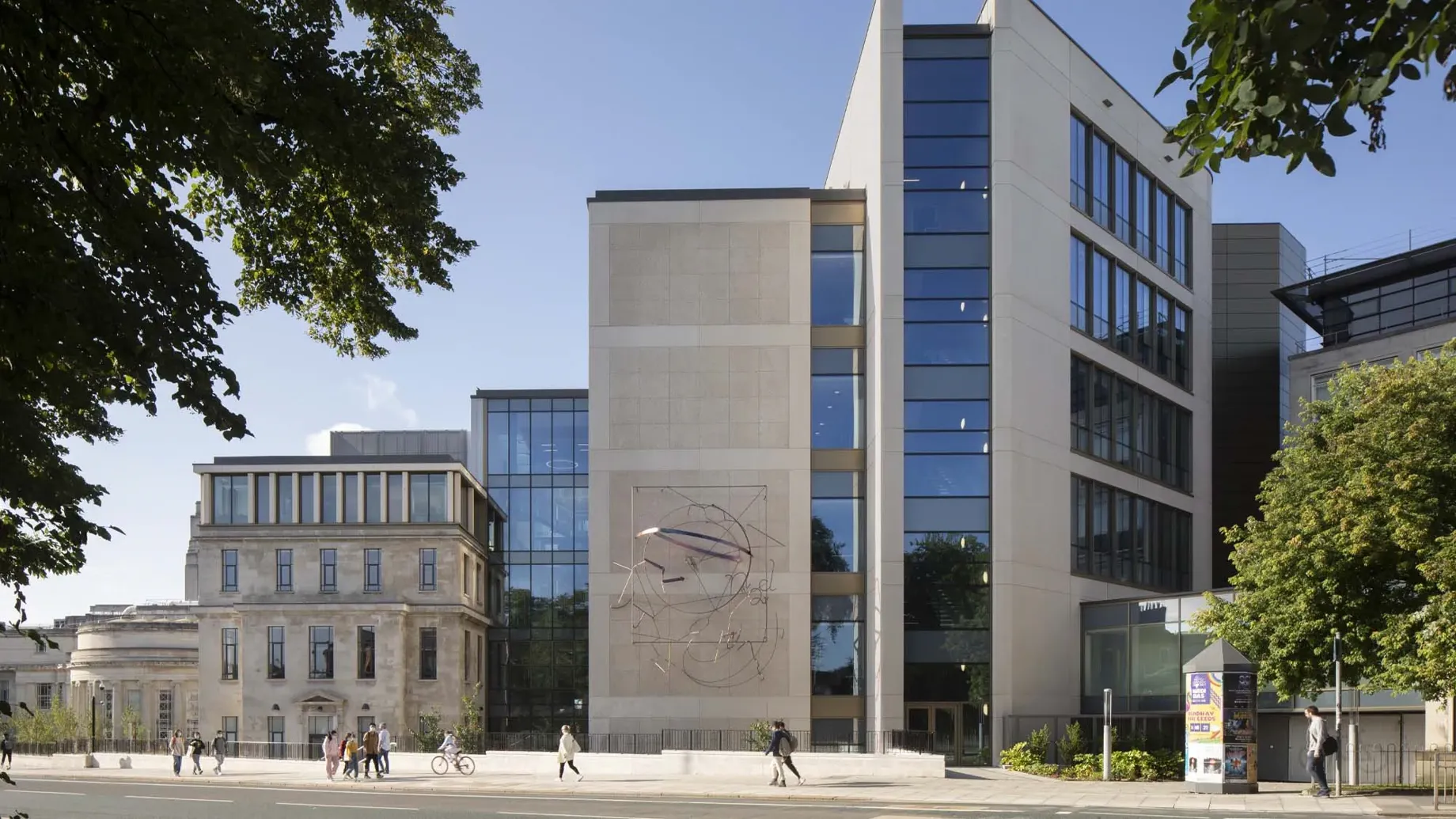
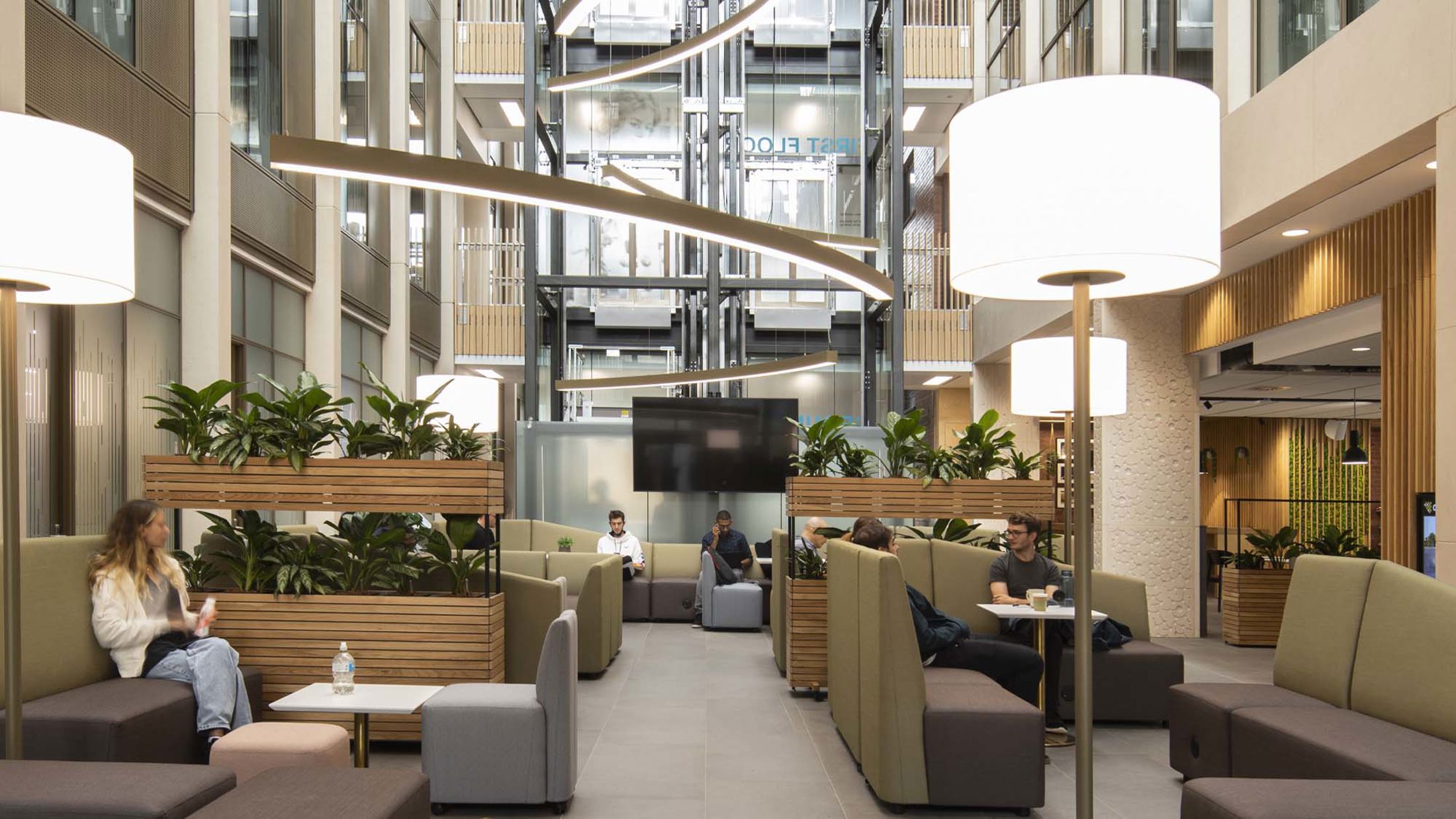
The Sir William Henry Bragg Building, built in 1930, incorporates the old School of Mining and has been sensitively repurposed and extended learning and research purposes. The £96m facility includes a new storey, with connections to a new seven storey complex that provides an impressive range of environments to foster interdisciplinary collaboration.
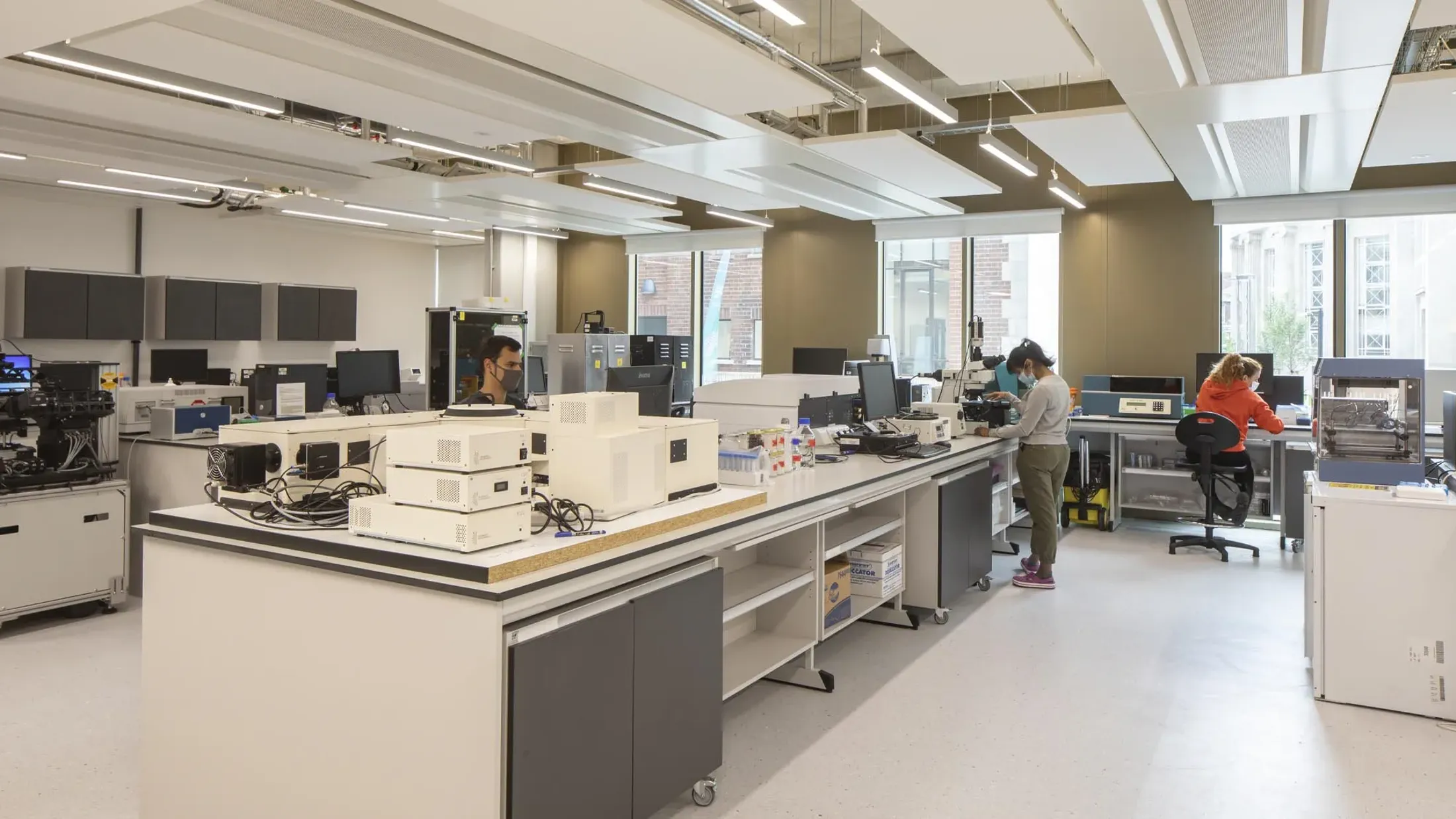
Named after a former University professor, who was awarded the Nobel Prize for Physics in 1915, the building combines the School of Physics and Astronomy and the School of Computing - housing some of the UK’s most advanced electron microscope technology, including the Royce Institute and Wolfson Imaging Facility. Arup was appointed as technical consultant from RIBA Stage 0 as a trusted advisor.
Unlocking the power of advanced modelling
Located near a busy road, it is vital that passing traffic does not interfere with ultra-sensitive laboratory instruments. A complex vibration analysis was carried out, using a range of tools to identify acceptable vibration criteria. Arup also used modelling to achieve electromagnetic compatibility, developing a mix of active and passive shields for sensitive equipment rooms.
Our acousticians advised on ways to mitigate sound impacts on the environment and building users, recommending plant with noise reduction capabilities and mechanisms to control reverberation in teaching spaces. Through modelling of demolition and construction noise impacts, we developed cost-effective and temporary mitigation options to avoid learning and research disruption.
Our modelling led to substantial cost savings for the client. Space planning for equipment that causes electromagnetic interference contributed to cost savings of £1m. Designing-in modern methods of construction validated the use of a largely precast concrete superstructure, rather than an in-situ concrete frame, significantly speeding up construction time and cutting costs and construction waste.
My thanks go to all the teams who have been involved in this project, internal and external, from inception right through to completion. I am delighted that this building will be a collaborative, supportive and safe environment for the entire University community and will foster a culture of collaboration, across the University and beyond.
Optimising energy performance in a high tech environment
With specialist research laboratories and high-density teaching spaces, the building’s operational energy demand was going to be high. Our mission, therefore, was to rapidly reduce this.
During design, Arup hosted workshops and site visits with users to understand their needs. Working closely with the client, we identified systems that could interface with the existing building, enhance user environments and improve maintenance. We supervised installation on site, including weekly site visits, presenting observations and defects to the client, minimising delays and contributing to a successful soft landing.
We carried out detailed modelling to optimise the cooling strategy for both efficiency and performance, working closely with chiller manufacturers. Through climate scenario modelling, we evaluated the potential of building systems to cope with future conditions. Additionally, computational fluid dynamics modelling for the electron microscopy suite provided airflow and temperature plots for the space.
We also collaborated with the client and contractor to reposition the substation to the basement, overcoming tight space constraints, preventing electromagnetic and harmonic impacts on sensitive equipment and supporting the maintenance strategy. A centralised supervisor control and data acquisition (SCADA) system offered a graphic interface for 24/7 monitoring and alerts, empowering operational management for efficiency.
Contributing to our low carbon future
Retaining the Grade II listed old School of Mining building’s Portland stone façade significantly reduced embodied carbon, while preserving heritage. Two bridges connect to the new-build element, where low carbon interventions include minimising material use, using concrete with significant cement replacement (GGBS) and implementing the BRE Global Eco-Reinforcement scheme. Further savings were achieved by leaving precast concrete exposed internally, minimising follow-on trades and cutting waste to reduce carbon. This also improved the building’s thermal mass, flattening peak heating and cooling loads.
The Sir William Henry Bragg Building contributes to several UN Sustainable Development Goals, including sustainable cities and communities, quality education and industry, innovation and infrastructure. By creating a world-class engineering and physical sciences hub, it will play a key role in the development of new materials, nanotechnology, pharmaceutical manufacturing, low-energy electronics and robotics, tackling current and future challenges.
Projects
Explore more science projects

Using Massachusetts’ new lab building code to support high-rise science space
Intellia Therapeutics Cambridge Laboratory/Office Renovation, USA

Bringing science and community together under one roof
Innovent Global R&D Center, Mainland China

Creating a collaborative environment for the premier particle physics laboratory in the United States
Fermilab Helen Edwards Engineering Research Center, USA
A space for life-saving research
Ragon Institute, USA
Get in touch with us
If you'd like to speak to one of our science experts about any of the issues raised on this page or a potential collaboration then please get in touch by completing the form.
