
Expanding a New York cultural landmark dedicated to contemporary art
The New Museum of Contemporary Art Expansion
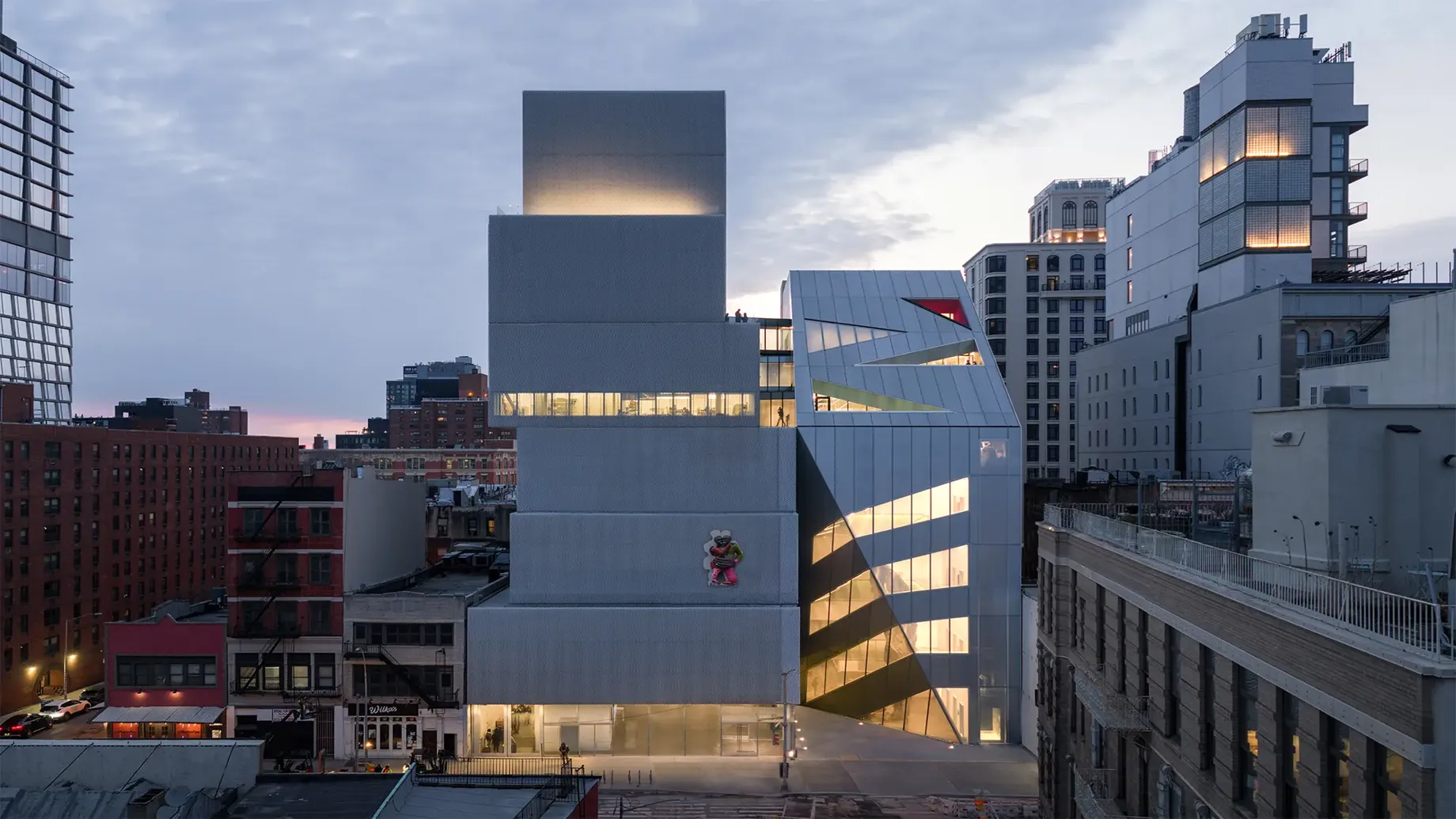
To realize their new 120,000 square foot building, The New Museum has expanded its presence to support the future of contemporary art, artists, and new ideas. To make this happen, they expanded their current space by 60,000 square feet and combined two structurally unique buildings.
Our structural, mechanical, electrical, and plumbing engineering and fire and life safety teams supported the expansion of the New Museum from schematic design phase through construction administration.
As the only museum dedicated to contemporary art in Manhattan, the expanded New Museum will offer an immersive and dynamic experience for visitors. With features such as a doubling of gallery space, a artists-in-residence dedicated studio, a purpose-built space for the Museum’s cultural incubator, and lobby with a restaurant and bookstore, the New Museum will strengthen its impact as a landmark cultural institution.
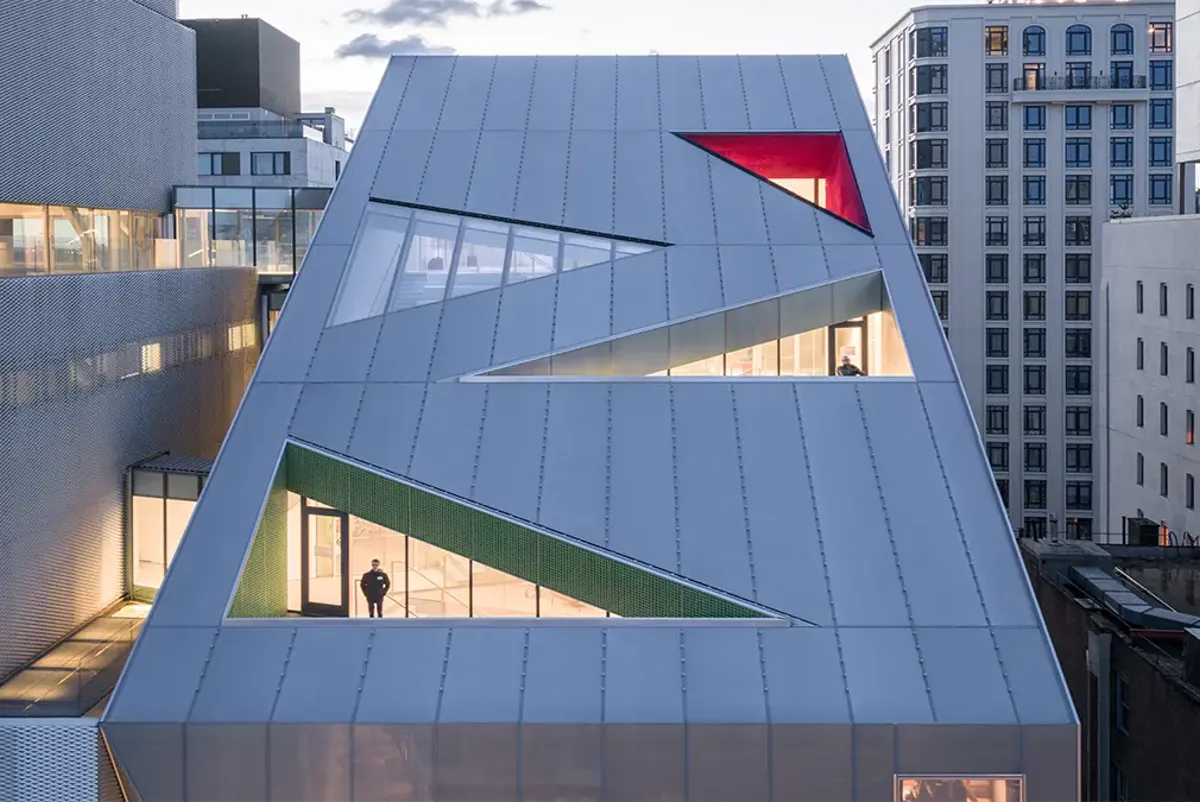
As the only museum dedicated to contemporary art in Manhattan, the expanded New Museum will offer an immersive and dynamic experience for visitors. Image © Jason O'Rear
Building MEP systems in alignment with the building’s structure
Taking precedents from the design that our MEP team implemented on the existing building, the design team looked to create an integrated strategy for the structure and building services to maximize the greatest possible gallery width within a tight site. This was complicated by the desire to have a clean and simple duct layout, with sprinklers integrated within them, and no ceilings to match the existing building. To address this early on in the concept design, we used the entire of the south wall for MEP distribution, allowing for many flatter ducts concealed into the wall thickness that roll out into the galleries between the primary beams to give a streamlined ceiling layout, maximize clear height, and maintain a gallery width almost as wide as the building lot
Creating a vertical circulation pattern that emphasizes safety and comfort
One of the key ideas embedded into the original concept for the expansion was to create a more effective and visible vertical circulation for the combined new and existing wings of the museum. To realize this, we created a geometrically complex staircase that is wrapped behind the sloping façade of the new wing and is visible from both the interior and exterior of the building. To achieve the architect’s vision, this required us to develop an intricate truss structure that both supports the stair and the sloping façade, as well as the careful integration of sprinklers and hydronic heating elements to service the stair and landings. The engineering details remain visible in the final installation through perforated ceiling panels, which made the tight integration essential.
To allow for the vertical circulation to connect all gallery floors seamlessly, the code requires downstands around the edges of the landings. To avoid the visibility of these downstands, our team innovated an alternate design that allows smoke and heat to accumulate in spaces created behind the perforated ceiling, enabling the stair to read as one continuous element wrapping around. A detailed CFD model was used to validate this design and get approval from the NYC Department of Buildings.
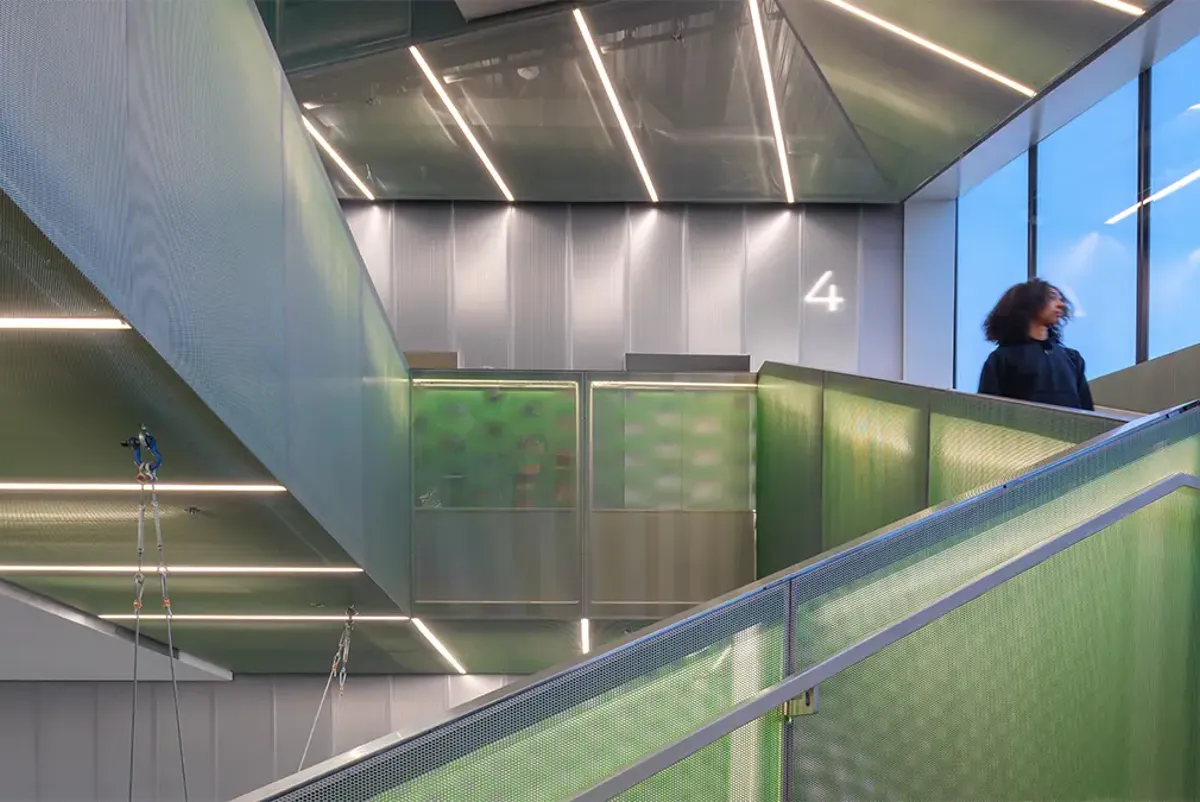
We created a geometrically complex staircase that is wrapped behind the sloping façade of the new wing and is visible from both the interior and exterior of the building. Image © Jason O'Rear
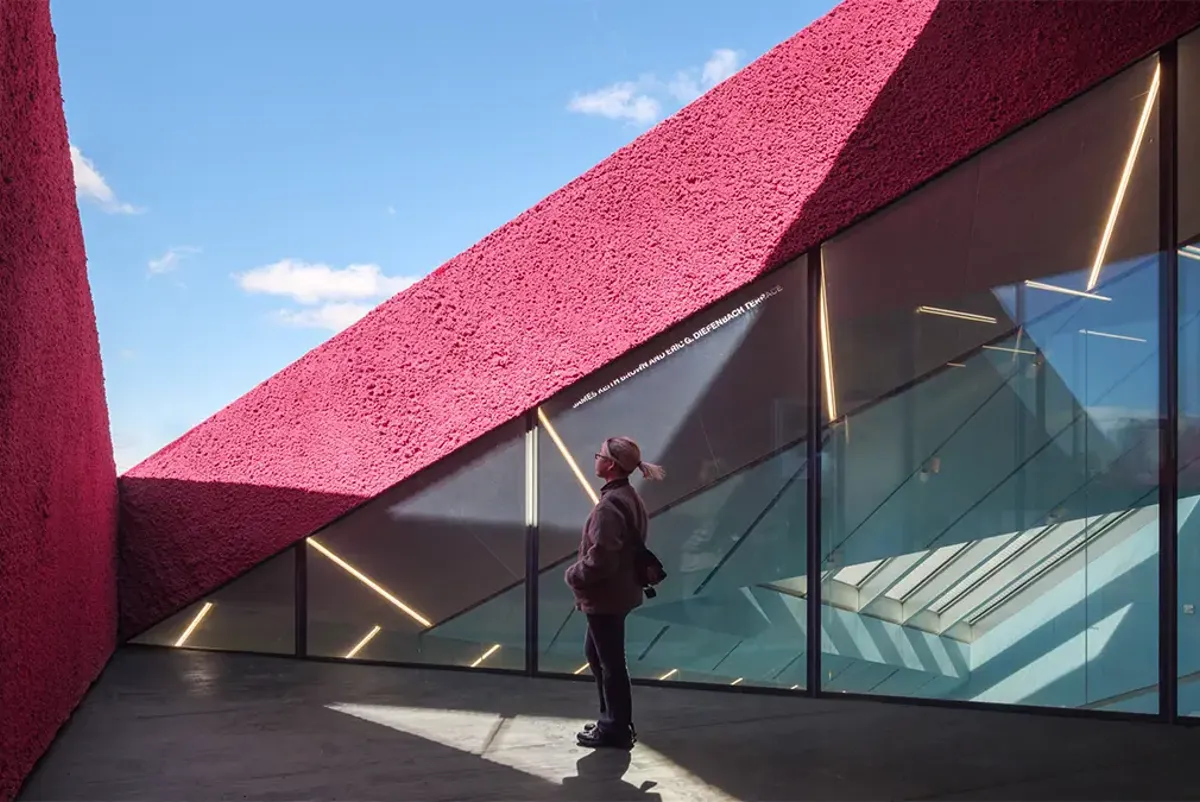
Our structural, mechanical, electrical, and plumbing engineering and fire and life safety teams supported the expansion of the New Museum from schematic design phase through construction administration. Image © Jason O'Rear


Projects
Explore more arts and culture projects

Creating a new paradigm in live entertainment
Sphere, USA

Delivering El Paso’s first purpose-built children’s museum
La Nube STEAM Discovery Center, USA

Enhancing an iconic New York City institution on the Museum Mile
The Frick Collection, USA
Supporting the enduring legacy and regeneration of a valued art center
Storm King Art Center Capital Project, USA
Get in touch with us
If you'd like to speak to one of our arts and culture experts then please get in touch by completing the form.
