
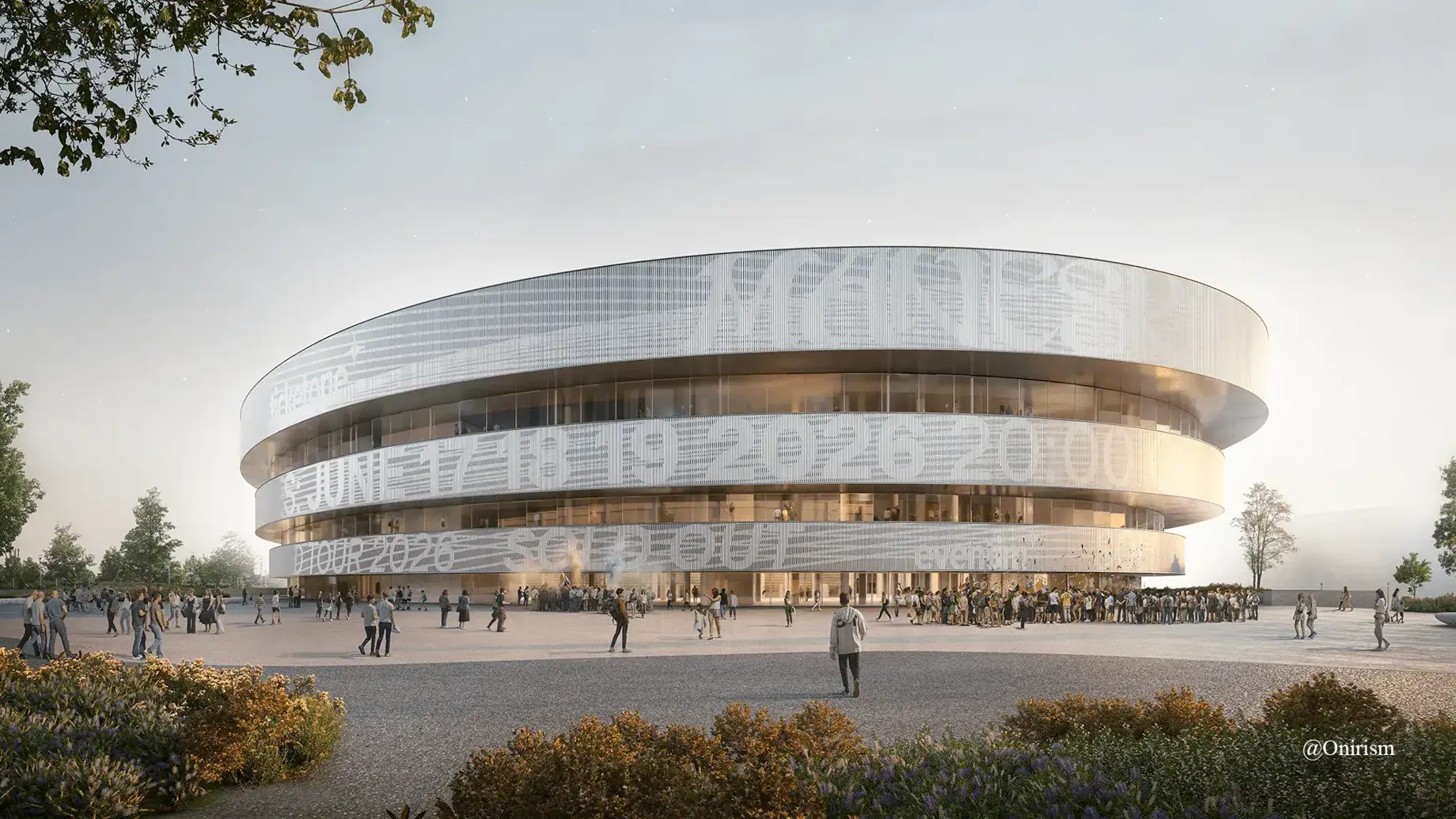
The new Arena Milano will be Italy's largest indoor venue, accommodating up to 16,000 visitors. Managed by European ticketing and live-event giants CTS Eventim, it will debut at the Milan-Cortina Winter Olympic Games in 2026, showcasing the men's ice hockey competition, before hosting a wide range of live entertainment and sports events.
Arup joined with David Chipperfield Architects (Berlin) to create a multipurpose arena that enhances user experience while designing a sustainable venue and surrounding urban redevelopment.
Arup's sustainability and design specialists created a plan to minimise carbon emissions and resource consumption in a climate-resilient development. Our multidisciplinary specialists also provided mechanical, electrical and public health engineering as well as specialists services for the project. Digital tools such as BIM and pedestrian and crowd simulation software were used to design a smooth and efficient movement of people inside the venue.
With sustainability as a key driver, the arena presents a unique opportunity to showcase cutting-edge innovation, maximise spectator comfort and minimise operational energy costs. Aligned with circular economy principles, the arena’s design looks not only at carbon content, but also at the entire lifecycle of the building. And it forms part of the Milano Santa Giulia urban redevelopment, a sustainable regeneration scheme offering a mix of housing, offices, and commercial space across 120 hectares, just a few kilometres from Milan’s city centre.
Parametric design
Standing on a podium, the elliptical arena consists of three stacked shimmering rings connected by light, transparent glass bands. Its elliptical outline reinterprets the shape of the classic amphitheatre with materials like aluminium tubes and LED strips on the façade. Inside, the arena features two covered tiers above the parterre level, served by four levels open to the public which host various hospitality services such as restaurants, lounges and skyboxes. The multi-storey car park that stems from the podium has been designed with a floor-to-floor height to allow a future reuse of the building as an office or residential block.
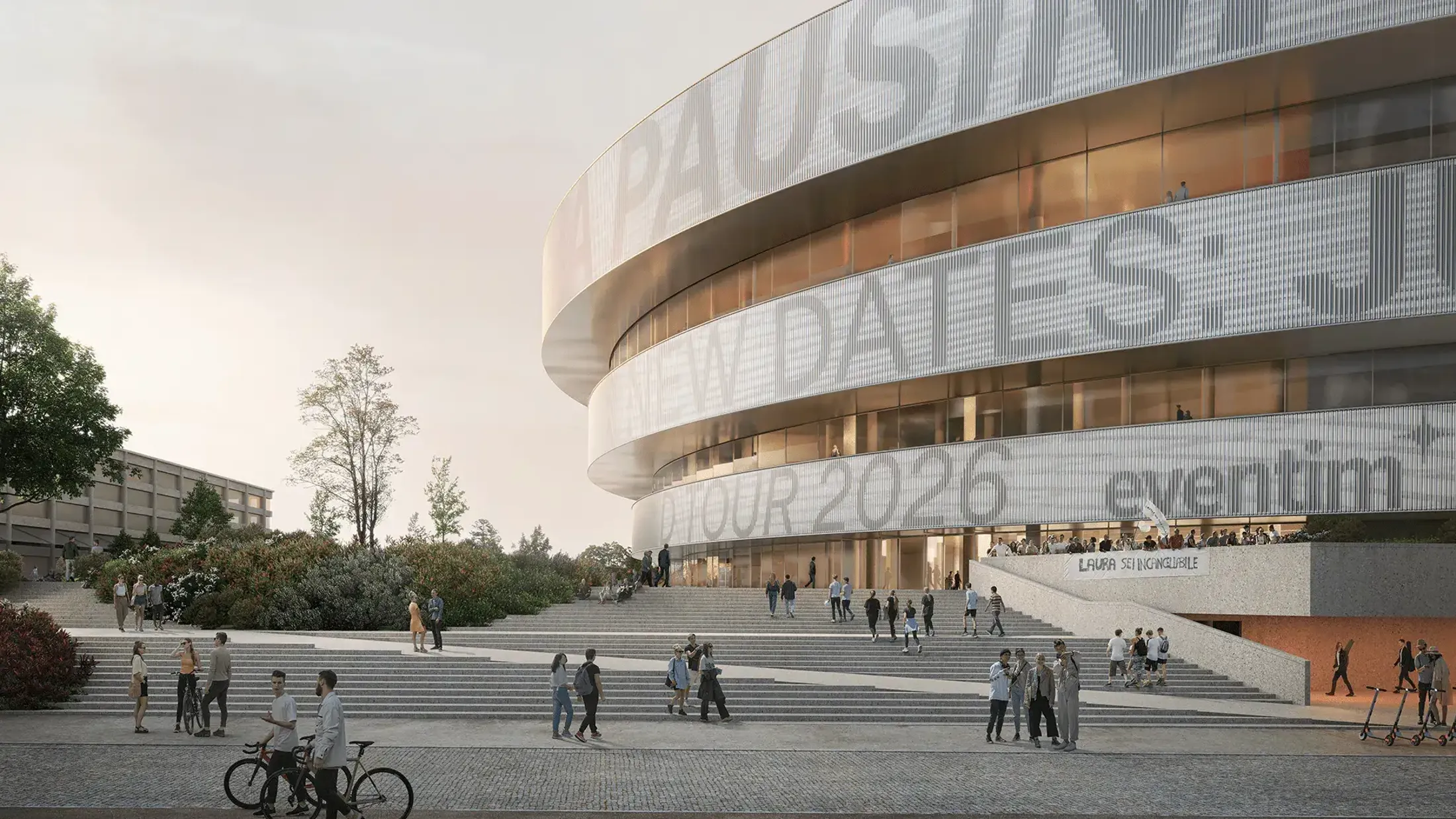
The design for the arena’s bowl is generated by a bespoke tool that optimises the view of every spectator in the building.
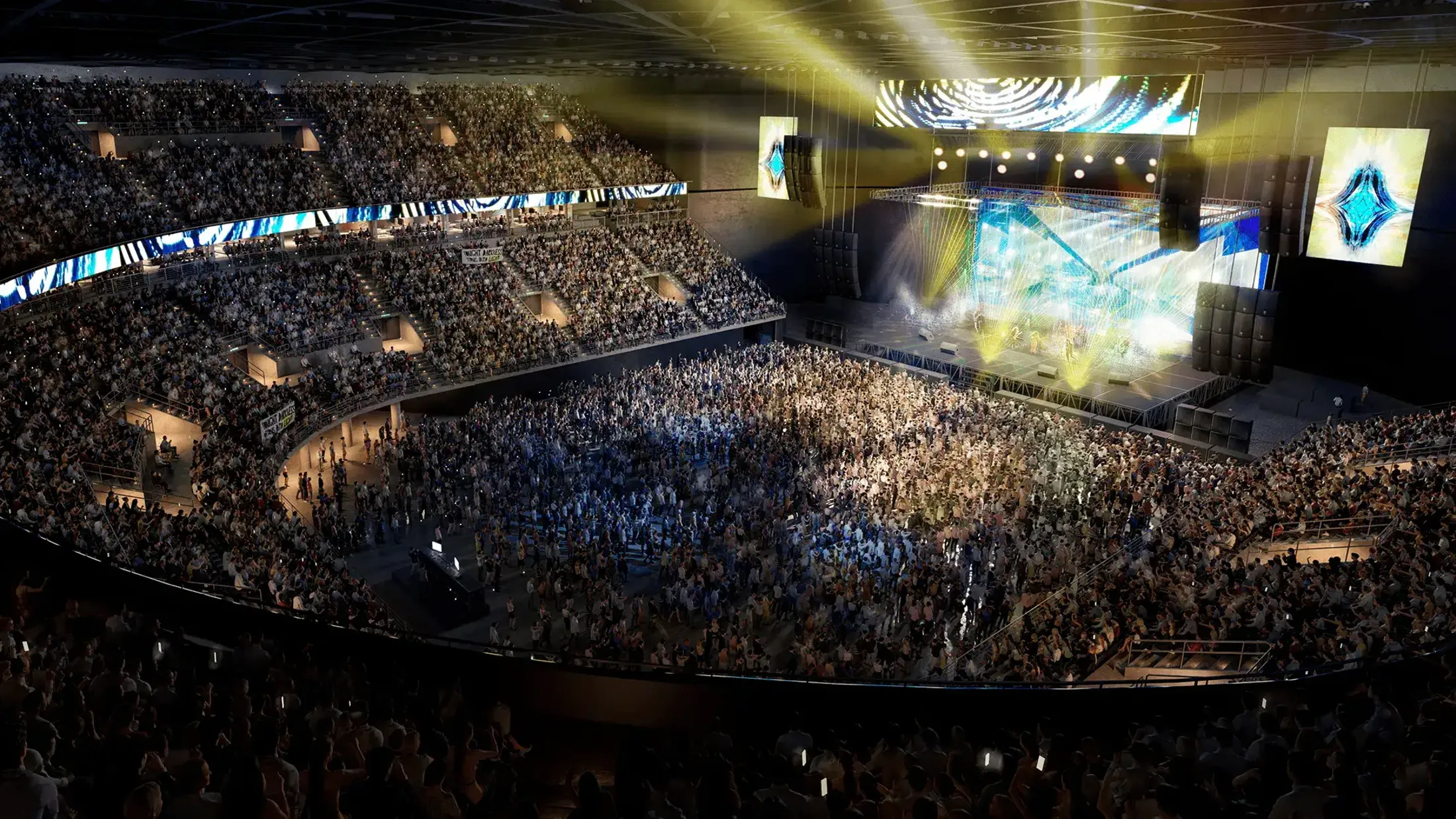
The venue will be Italy's largest indoor venue and will be able to host a range of events including concerts.
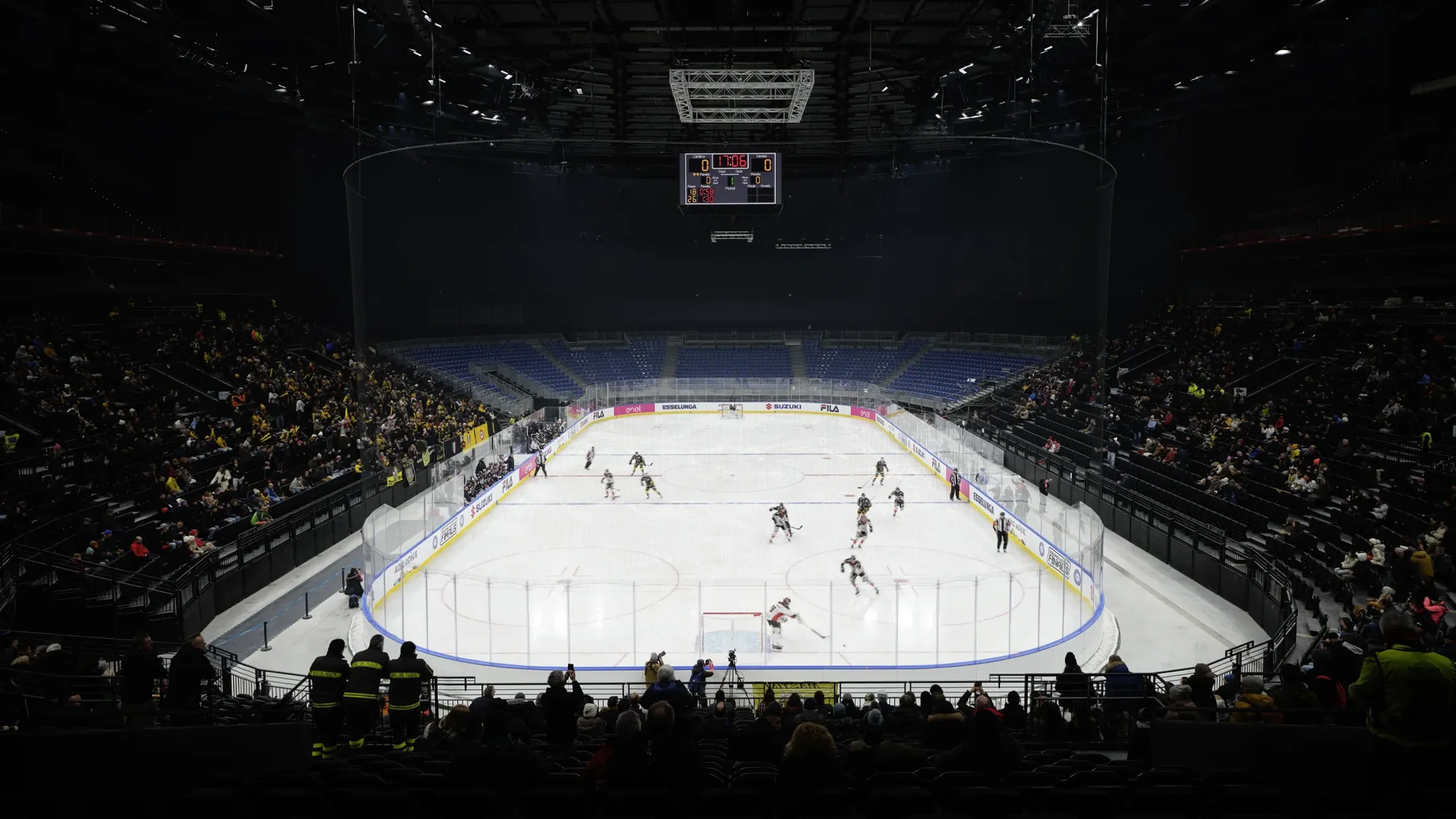
The arena will debut at the 2026 Winter Olympic Games.
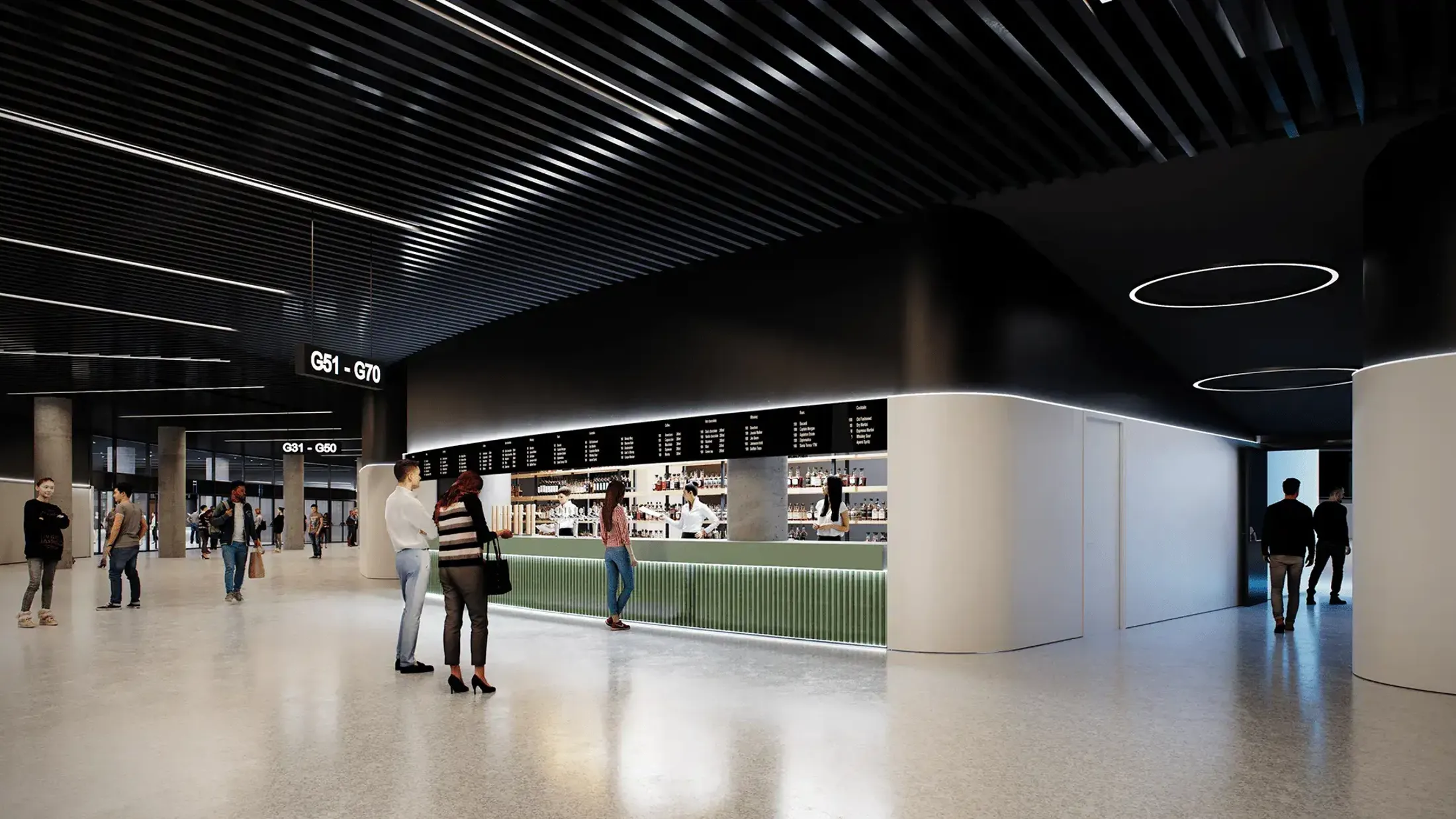
Pedestrian and crowd simulation software have been used to ensure smooth and efficient movement of people inside the venue.
Arup’s team explored a complete range of design options for the arena through parametric design to build a unified solution that reconciles competing demands. Each element of the building’s design, including the façade, has been generated by parametric modelling tools, allowing us to reduce the project’s carbon footprint by scaling down the amount of material used during construction. While sustainability was a key driver for the client, cost and constructability were also factors that parametric design helped us to address, particularly with the importance of the looming 2026 Olympics deadline.
Circular and resilient by design
With sustainability as a key driver, the arena presents a unique opportunity to showcase cutting-edge innovation, maximise spectator comfort and minimise operational energy costs. Aligned with circular economy principles, the arena’s design looks not only at carbon content, but also at the entire lifecycle of the building.
Our approach set a maximum embodied carbon target and prioritised modular and off-site components to reduce waste. The project’s construction methodology promoted the use of reused and recycled materials, with natural and regenerative materials implemented for internal finishings such as acoustic insulation.
Once completed, the building will be one of the biggest single development producer of renewable energy in Milan, generating around 1 MW of photovoltaic energy. The photovoltaic panels on the arena’s roof will allow for energy to be generated locally. Within the arena, heat pumps will rely on renewable exchange with external air to reduce electrical consumption. In addition, heat recovery from the arena’s chilling system reduces further demand. Inside the arena, LED lighting is used to minimise energy usage. For the arena’s audience, the venue will provide electrical vehicle charging points, in compliance with local codes.
Within the arena, an adaptive energy design concept will allow for heating and cooling to be controlled. This will be vital during sports events, such as ice hockey, where the temperature of the ice will need to be maintained and fog managed.
David Chipperfield Architects
Projects
Explore more sports architecture projects

Alexander Stadium: Delivering a sporting and community legacy for Birmingham
Alexander Stadium, United Kingdom

Creating a versatile sports hub with traditional Islamic architecture and innovative design
King Abdullah Sports City, Saudi Arabia

Award winning architecture for the Singapore Sports Hub - Asia's first integrated leisure and lifestyle development
Singapore Sports Hub, Singapore

Delivering the Games to shape a lasting legacy for Lima
Lima 2019 Pan American and Parapan American Games, Peru
Get in touch with us
If you'd like to speak to one of our Architecture experts about any of the issues raised on this page or a potential collaboration then please get in touch by completing the form.
