
Arup engineered New Museum’s OMA-designed building in New York City
Arup played a key role in creating an integrated seamless extension to the New Museum's existing SANAA-designed flagship building and a place where art, people, and the city intersect.
Last updated: 23rd March 2026
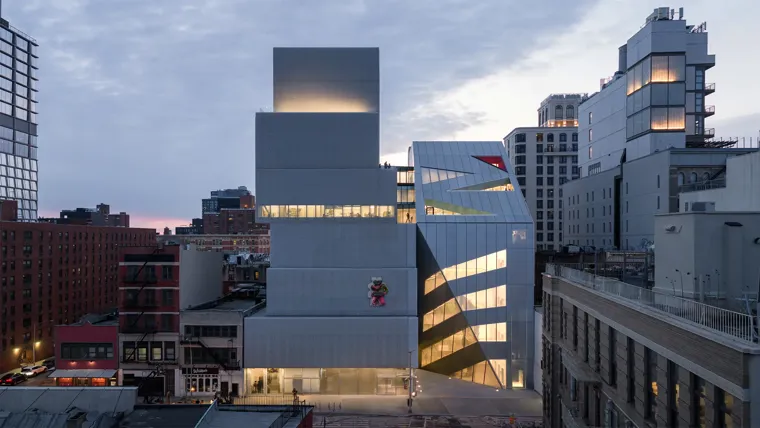
The New Museum opened its transformative new building to the public on March 21, 2026. For the 60,000 square foot expansion, Arup provided structural, mechanical, electrical, and plumbing engineering (MEP), as well as fire protection systems engineering. Working as a consultant to the design architect OMA / Shohei Shigematsu and Rem Koolhaas and executive architect Corgan, Arup played a key role in creating an integrated seamless extension to the museum’s existing SANAA-designed flagship building and a place where art, people, and the city intersect.
“The design for the New Museum expansion showcases what can be achieved when architecture, structure and building systems are all thought about together from the very start of the concept design,” says Matt Jackson, Associate Principal and Project Director, Arup. “This design process has enabled a remarkable architectural vision to be realized and is visible both inside and outside the building where a complex truss structure not only supports the façade and complex staircase, but creates a whole new clarity in the circulation for the museum.”
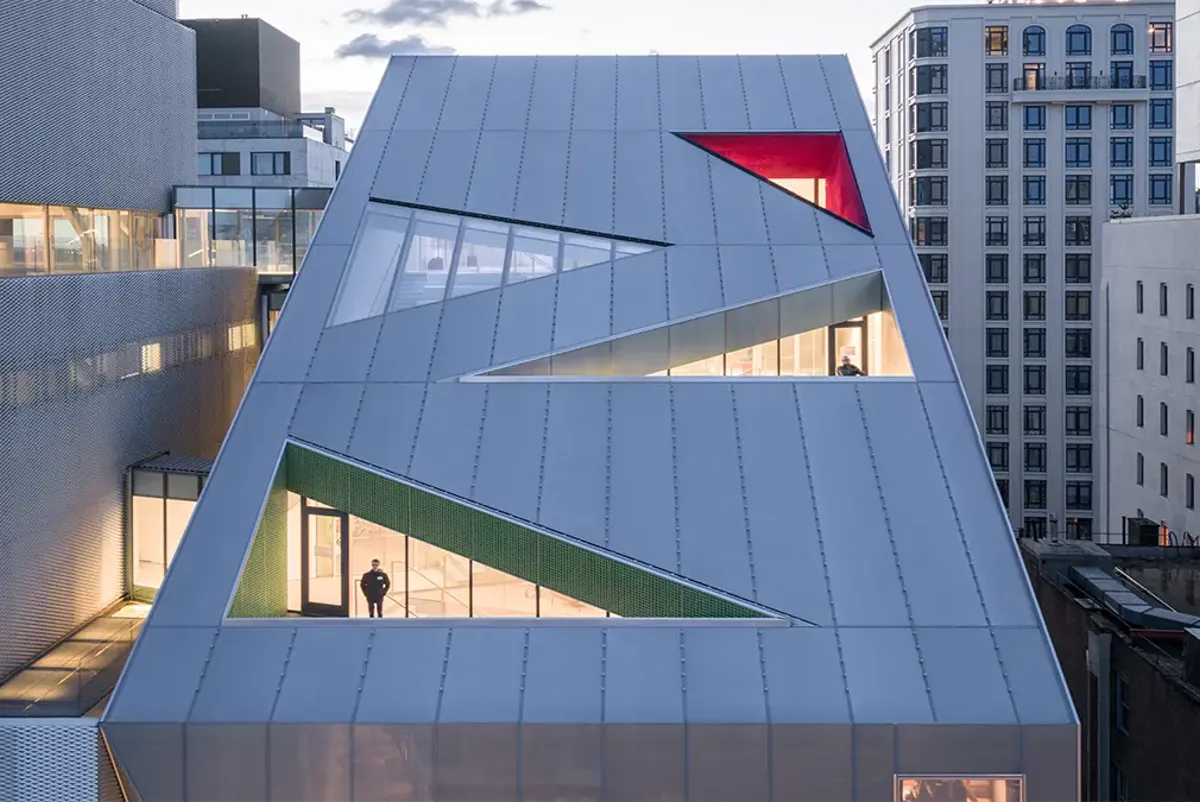
Arup designed MEP systems across the joint buildings structure to achieve the greatest possible gallery width within a tight site, also informed by the firm’s previous work on the existing building. © Jason O'Rear
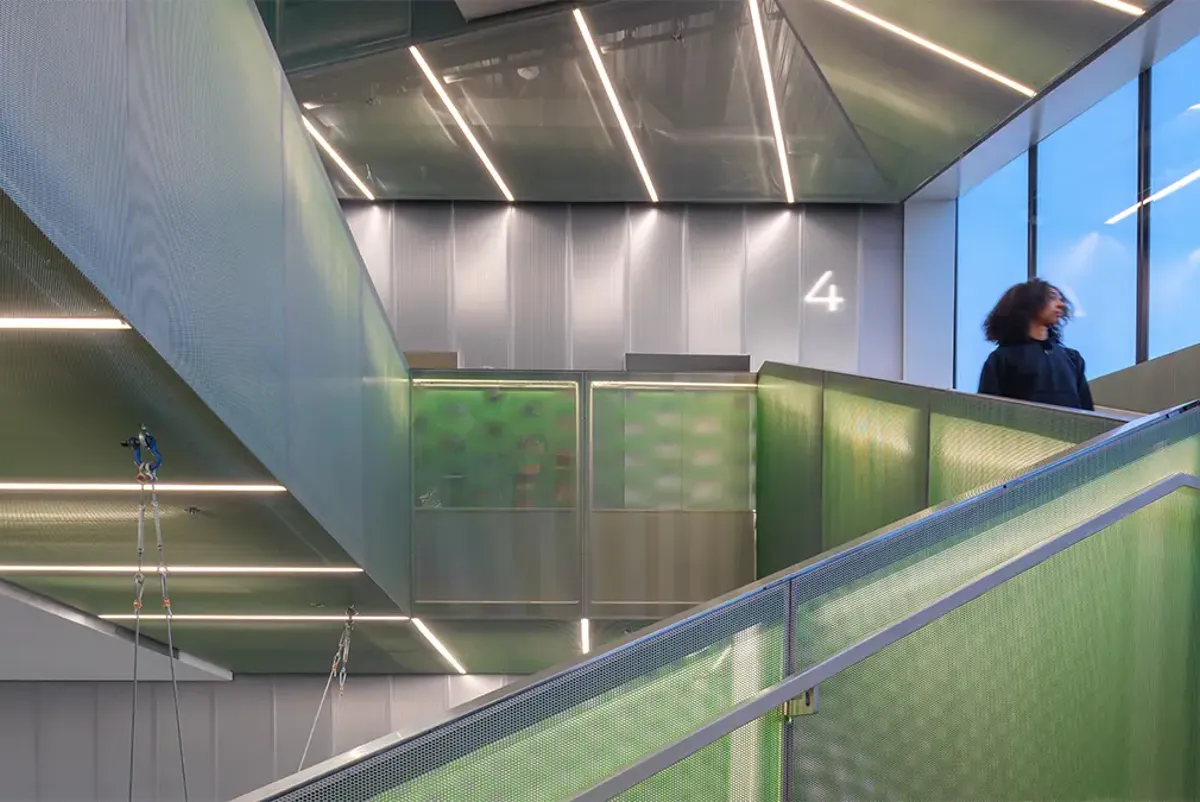
Arup created a geometrically complex staircase that wraps behind the sloping façade of the new wing for an expansive vertical circulation © Jason O'Rear
As the only museum dedicated to contemporary art in Manhattan, the expanded New Museum offers an immersive and dynamic experience for visitors through its doubled gallery space and fluid circulation through an atrium stair and the entire building with multiple purpose-built spaces.
Arup designed MEP systems across the joint buildings structure to achieve the greatest possible gallery width within a tight site, also informed by the firm’s previous work on the existing building. The team used the entire of the south wall for MEP distribution, concealing ducts into the wall thickness that roll out into the galleries between the primary beams to give a streamlined ceiling layout, maximize clear height, and maintain a gallery width almost as wide as the building lot.
Additionally, Arup created a geometrically complex staircase that wraps behind the sloping façade of the new wing for an expansive vertical circulation. The team developed an intricate truss structure that both supports the stair and the sloping façade, as well as the careful integration of sprinklers and hydronic heating elements to service the stair and landings. For fire protection, the firm innovated a design that creates spaces behind the perforated ceiling for smoke and heat accumulation, enabling the stair to read as one continuous architectural element while adhering to the code requirement.
Explore our work on the New Museum expansion
Related news
Explore more arts and culture news

Learn more about Arup
A global consultancy shaping infrastructure, buildings, energy and sustainability for the built environment.
