
What hosting the Olympics reveals about urban operations and long-term performance
From Calgary and Salt Lake City to LA28, the Olympic and Paralympic Games expose a fundamental urban challenge: whether cities and regions can work as one when the pressure is on.
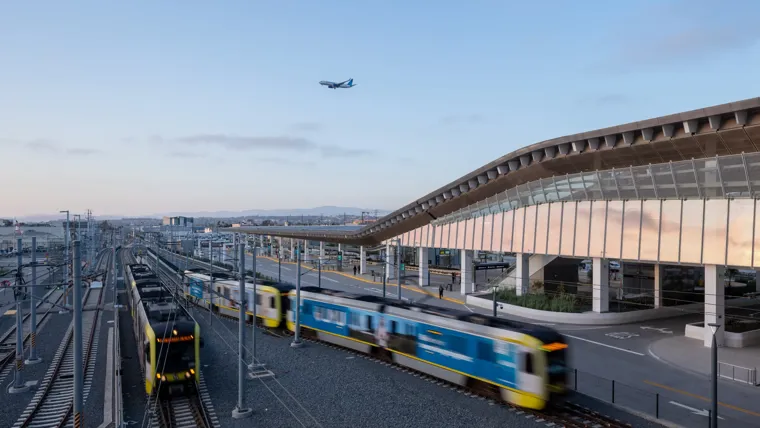

The legacy of the Olympic and Paralympic Games is more profound than the infrastructure improvements left behind.
Arup’s Ivana Gligoric argues that hosting an event of this scale tests how effectively a city’s institutions work together to deliver the Games and achieve long-term goals. Drawing on more than 20 years of experience advising major global events, Ivana shares her perspective on what hosting the Games reveals about cities in this Urban Land article.
"Far more complex than single-sport events, multi-sport events require an entire city, and often an entire region, to function as one coordinated system. Over the years, working on major events around the world, I've found myself coming back to the same observation: events like the Olympic and Paralympic Games do more than test infrastructure. They expose the invisible architecture that sits beneath it. Under pressure, strengths become obvious, but so do the cracks. What emerges is a remarkably clear picture of how well institutions, agencies, and municipalities can work together when the stakes are highest.
In my experience, an unrecognized legacy of the Games is an improved ability for cities to work across agencies, jurisdictions, and institutions. In this article, I explore the idea of a city's "hidden operating system" - the governance structures, relationships, and decision-making networks that allow an entire metropolitan region to act as one.
That capability can be built through delivering the Games. Cities that have learned to work together under the extraordinary pressure of the Games can be better prepared to manage growth, attract investment, and respond to whatever challenges come next.
Having worked with many of the organizations preparing for LA28, my hope is that the region makes the most of this opportunity. Few Games require coordination across as such a complex, decentralized metropolis. If there was ever a chance to strengthen the hidden operating system of the region, this is it."
Ivana shares her full perspective on what hosting the Games reveals about cities in this Urban Land article.
(article duplicated by the kind permission of UrbanLand, below)
How the Olympics Stress-Test Cities and Urban Infrastructure
From Calgary and Salt Lake City to LA28, the Olympic and Paralympic Games expose a fundamental urban challenge: whether cities and regions can work as one when the pressure is on.
Hosting the Olympic and Paralympic Games brings together heads of state, athletes, media, sponsors, and millions of visitors, creating one of the largest peacetime security operations most cities will ever undertake. The real test is not any single piece of infrastructure or system, however, but how well they function as a cohesive whole.
Events such as the Olympic and Paralympic do not create urban weaknesses, but they do expose the underlying conditions already embedded within a host city or metropolitan region. They also reveal something less visible: whether varied institutions, entities, and systems are able to work together or not. These events place extraordinary pressure on urban systems, putting their strengths and weaknesses under global scrutiny.
The Games put that capacity for coordination to an extraordinary test. As multisport events, they are far more complex to host than single-sport events—such as the FIFA World Cup—and require multiple civic systems to perform simultaneously and without friction. Transportation networks must absorb unprecedented flows, while airports may operate at extreme capacity. Public safety resources are stretched, while utilities, digital infrastructure, governance structures, and municipal services must work in close coordination under heightened scrutiny and with almost no tolerance for failure.

Los Angeles Memorial Coliseum will become the first stadium to host the Olympics for a third time come 2028.
Testing Coordination as Much as Infrastructure
Institutional divisions that may remain manageable in daily operations become unmistakably apparent before and during major events. Agencies can operate independently, municipal boundaries can remain rigid, and departmental inefficiencies can persist for years without immediate consequence. However, the margin for disconnection can collapse under the pressure to deliver on deadline. Delayed handoffs, unclear authority, and siloed decisions can quickly snowball into bigger problems with metropolitan-scale consequences.
The ability to manage those interfaces can be as important as the capacity of the individual systems themselves. Transportation, public safety, communications, and other essential systems must operate in concert. Few other urban interventions impose such concurrent demands on so many interconnected networks.
Research on the delivery of large and complex event programs points to governance—and particularly coordination across institutions—as a key determinant of successful delivery. In this sense, hosting the Olympics is not merely a sporting challenge but a test of whether a city’s municipalities, agencies, and infrastructure can work in unison toward a common goal.

Families ice skating at the Olympic Plaza in Calgary, Alberta, Canada, host of the 1988 Winter Olympics.
Why Regional Governance has Become a Defining Factor
With improvements in transportation, communications, and infrastructure, people and businesses are increasingly spread across metropolitan regions rather than concentrated within individual cities. An area’s primary business center may be in a different jurisdiction than its key housing market, recreational areas, or industrial base. While municipal boundaries may remain intact, the economic geography of urban life increasingly transcends them.
The critical question is no longer whether a city can finance infrastructure or attract investment, but whether it can coordinate that effort across local governments, overlapping public authorities, and competing priorities.
Major events demonstrate with unusual clarity whether regions that appear connected economically and physically can also act collectively. Effective regional governance can help advance capital projects, coordinate services, and connect transportation across jurisdictional boundaries—capacities that matter not only during major events, but also as regions manage long-term growth and change.
A Lesson in Cross-Regional Coordination
Calgary’s 1988 XV Olympic Winter Games showed an early glimpse of a more regional approach to hosting, informing the most recent example of Milan cohosting the 2026 Winter Olympics and Paralympics with Cortina. Calgary’s Games were a province-wide partnership among the City of Calgary, the Province of Alberta, the Canadian government, municipal and recreational authorities of the region, as well as the Olympic Committee. The partnership provided a framework for aligning venues and investment decisions around a shared vision for the region’s long-term legacy.
The Games intentionally extended beyond Calgary into the nearby communities and recreation areas of Canmore, Nakiska, and Kananaskis. Rather than creating isolated venues, these sites were integrated into broader regional investment that linked mobility, tourism, recreation, and economic activity across southern Alberta.
Nearly four decades later, much of that winter sports infrastructure continues to serve elite athletes and the public alike. Nakiska, identified as a prime area for competitive downhill skiing, was purpose-built to host the alpine skiing events for the Olympics and become a public ski resort and training center after the Games. Likewise, the Canmore Nordic Centre, constructed for the cross-country skiing and biathlon events, remains one of North America’s premier Nordic sport facilities.
These former Olympic venues stand as the visible legacy of the 1988 Games, but the city’s most impressive accomplishment was its ability to unite multiple jurisdictions, institutions, and systems to function as a whole both during the Games and after.
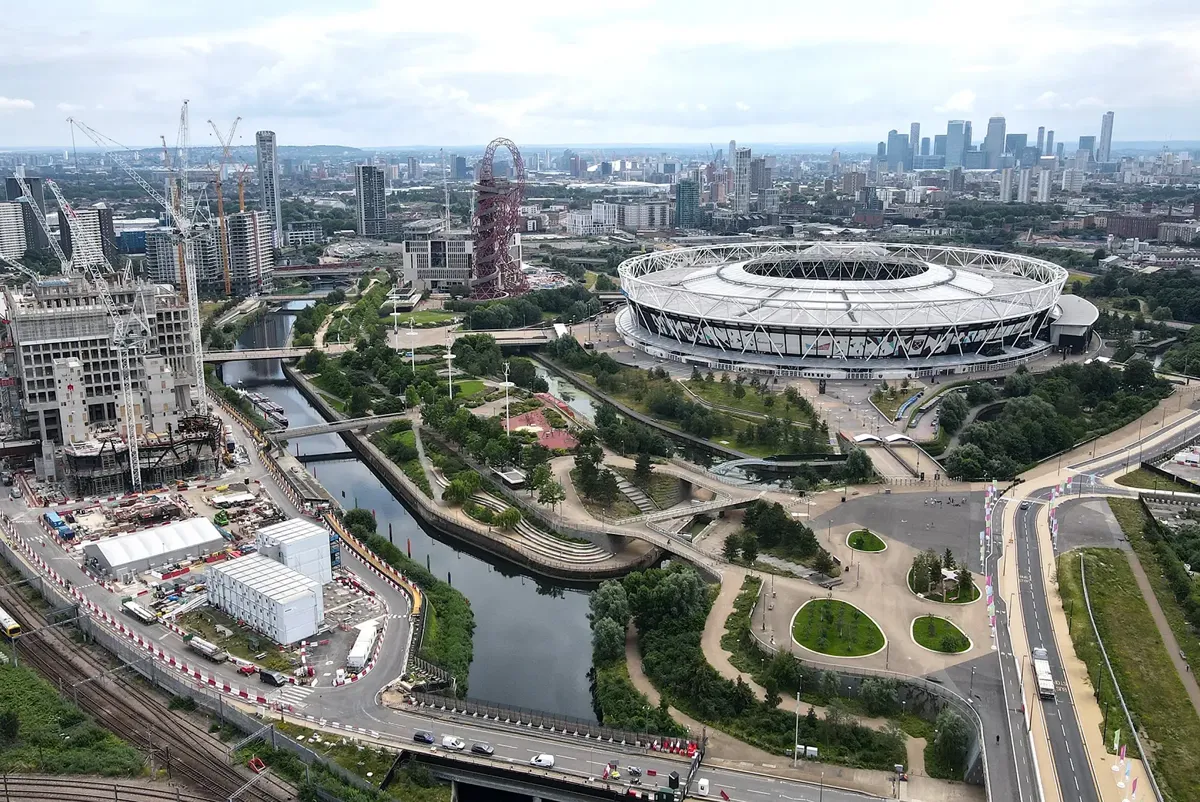
Arup provided multi-disciplinary services for the area in and around Queen Elizabeth Olympic Park in London ahead of the 2012 Olympics and Paralympics.
Capitalizing on Existing Assets
In 2002, Salt Lake City further refined the distributed urban model. At a time when Olympic hosting was increasingly associated with extensive new construction, the city built its hosting strategy around many of the winter sport assets already in place.
Years of strategic investment in such facilities, combined with existing venues dispersed across northern Utah, enabled organizers to focus on selected upgrades, targeted new investments, and regional coordination rather than wholesale redevelopment. The result was a hosting model grounded less in temporary spectacle and more in operational practicality, infrastructure longevity, and lasting regional value.
This long-game approach to the 2002 Olympics resulted in a permanent and robust winter sports ecosystem that continues to thrive around the former venues, helping solidify Utah as a premier ski destination. Equally important, those Games demonstrated how the region can come together as a coordinated network to manage such a large event. Having the infrastructure already in place as well as its prior experience in 2002, it is not difficult to see why Salt Lake City was selected to host the 2034 Winter Games.
LA28: A Live Metropolitan Experiment
The need for greater cross-jurisdictional coordination is especially acute in Los Angeles. LA28 may become one of the clearest contemporary demonstrations of whether a decentralized urban region can act collectively under pressure. The Games will unfold across one of the world’s most sprawling urban environments, requiring coordination among dozens of jurisdictions, agencies, infrastructure providers, and venue operators.
For LA28, the challenge lies not only in delivering operations and infrastructure across its immense metropolitan geography but also achieving the regional coordination required to succeed under pressure. Los Angeles will need clear lines of authority, shared information, and coordinated plans for transportation, services, and security. Can the city move spectators and workers, manage security, and respond to emergencies all while maintaining the essential services its residents rely on every day?
Socially, economically, and spatially, Los Angeles already functions as an interconnected regional system. Yet its governance remains distributed across overlapping institutions and fragmented jurisdictions. The LA28 Games will force those institutions to work together at extraordinary scale and speed, stress-testing their ways of working.
This matters far beyond the Games themselves. The lessons that emerge—from transportation and emergency response to capital planning and interagency collaboration—could prove as valuable as any physical legacy, showing where regional coordination works and where gaps remain.
Regional Coordination as Strategic Advantage
The future competitiveness of urban regions may increasingly depend on their capacity for integrated governance rather than their ability to invest in individual assets alone. Regions that coordinate well can make decisions faster, avoid duplicate investment, connect transportation more effectively, get greater value from existing assets, and strengthen long-term economic performance.
This same logic is already visible in discussions about future Olympic models, including the idea of New York City partnering with Lake Placid on a future Winter Games bid. Whether realized or not, the idea is significant. It reflects a growing recognition that hosting major events may increasingly require cities and regions to share infrastructure, assets, and operational responsibilities across a wider geography.
Major events can therefore leave behind something less visible than a stadium, transit improvement, or other physical asset: a clearer understanding of how a region works—and where it does not. In the best cases, the coordination required to deliver the Games can outlast the event itself, strengthening the relationships and ways of working that regions need to manage growth, disruption, and long-term investment.


Insights
Explore more sport insights
How Alberta could shape the future of the Winter Olympics

The opportunity of host city moments: Rethinking how cities partner with community organizations

Plan for the fans: how to magnify the audience and impact of sporting events

Improving the host city bargain: a new focus on multi-location events

Sport
We work across the sports ecosystem with venue owners, organising committees, designers, contractors and event operators to deliver a wide range of integrated multi-disciplinary solutions that can resolve the complex relationships specific to sports venues and events.
