
How to curate a better passenger experience in deep underground stations
Descending to subterranean depths can create a sense of unease or claustrophobia for passengers. This effect is compounded when stations are confusing to navigate, dimly lit, or feel unsafe. To create a better experience in deep underground stations, designers and architects should prioritize passenger needs.

When expanding rail infrastructure within a major city, underground networks preserve the existing urban fabric while supporting its future growth. But tunneling underneath a densely populated environment presents a unique set of challenges. Designing stations deep underground requires, above all, intentional consideration of passenger needs. The safety, accessibility, wayfinding, and comfort of travelers directly impact the performance of subways and metro lines.
Making sense of complexity
Outside of passenger experience, underground station design is influenced by a range of complex factors including the geotechnical environment, existing underground utilities, and space constraints as well as alignment. A deeper station means a more holistic excavation process and greater structural consideration is required. Not to mention, its construction can significantly disrupt life above ground.
When considering the station’s configuration, take a “less is more” approach with simple connections between levels and optimized transfer routes. Moreover, resolving complexities with efficient design and collaborative delivery can reduce capital costs and keep complex programs on schedule.
For Cityringen Metro in Copenhagen, Demark, the stations were built using the cut and cover construction method and an optimized with a “kit of parts” design. This approach demonstrates how using a compact, repeatable modular design can ease the introduction of a new infrastructure in an urban context.

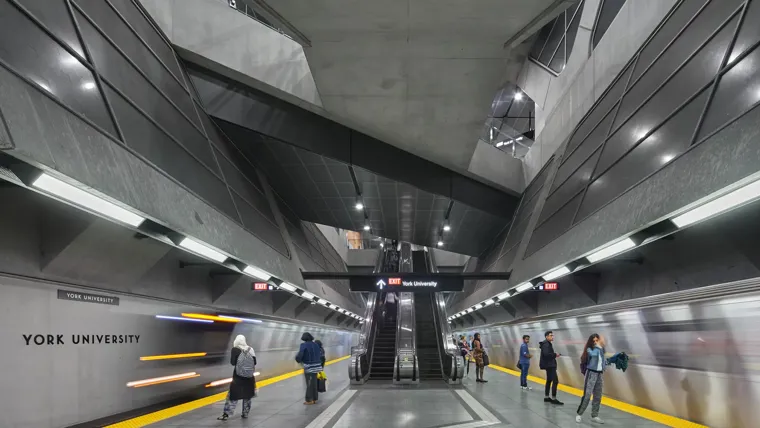
Second Avenue Subway, New York City | 30 meters
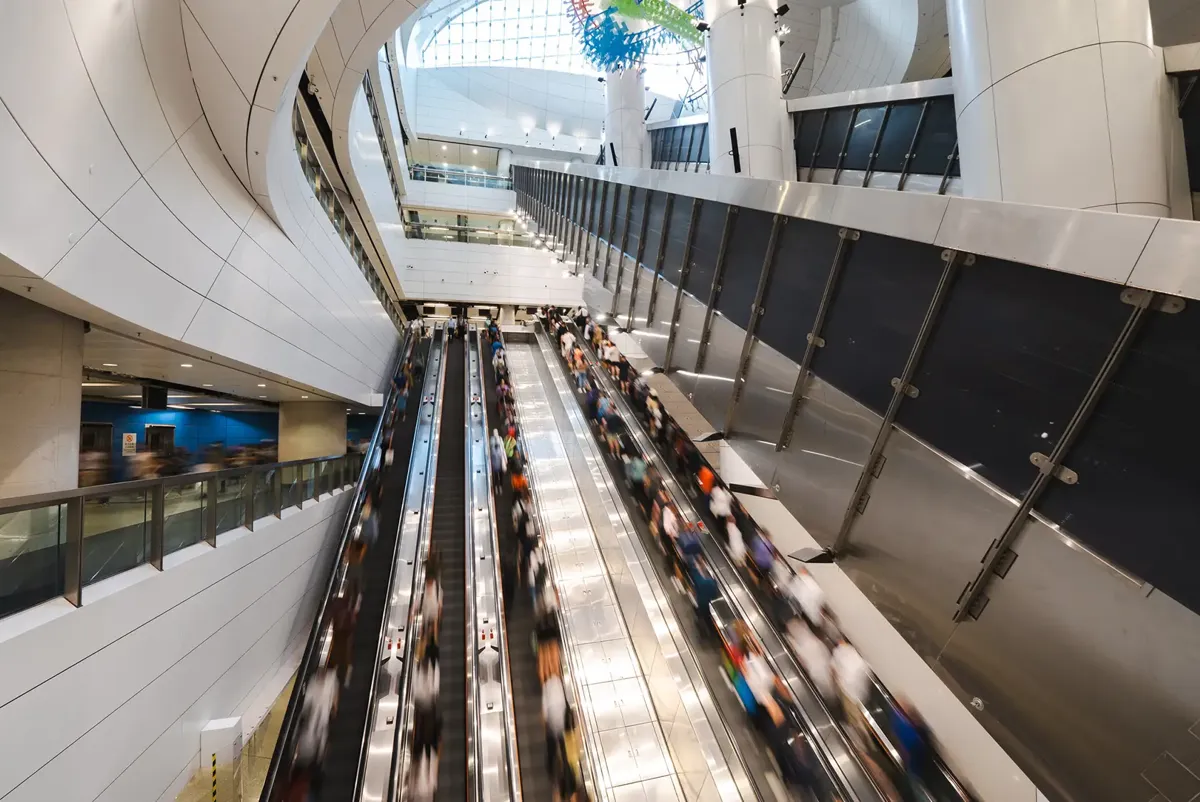
Admiralty Station, Hong Kong | 40 meters
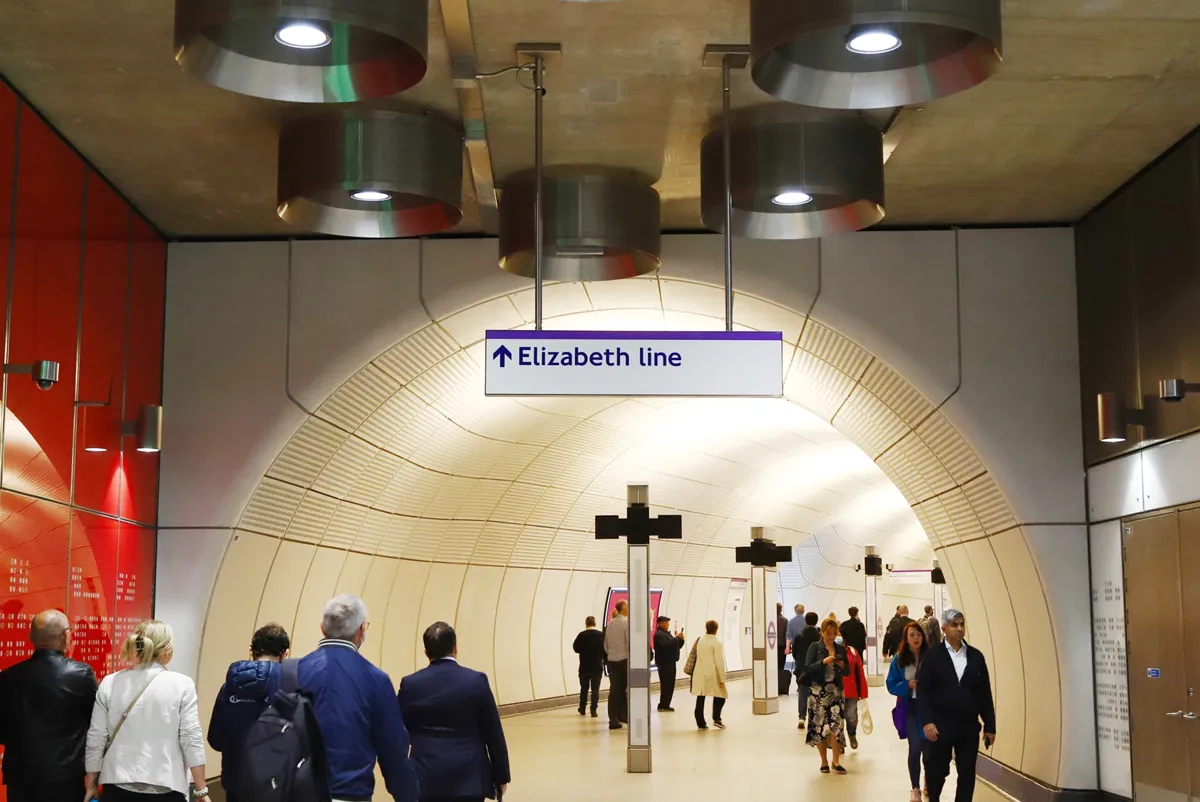
Tottenham Court Road Station, London | 30 meters
Prioritizing passenger perception
Research shows that a passenger’s experience is shaped by their perception of the journey through a station. Feelings of safety, speed, and ease make up the foundation for what a rider requires – otherwise, they may choose to take another mode of transportation entirely. Comfort and elegant design can help improve the overall experience.
These factors are even more significant in deep stations, where longer distances, confined spaces, and an underground environment can intensify negative perceptions. Poorly lit spaces and limited access points can lead to passengers feeling unsafe deep underground. Long tunnels with no visible end can make the experience feel drawn out and impact a passenger’s perception of travel time. When faced with a mountain of stairs to climb, riders can feel stranded, especially at the lowest levels of the station.
The design of deep underground stations should aim to mitigate feelings of claustrophobia, anxiety, and discomfort. Stations should feel safe, easily navigable, and visually connected.
Designing for each step of the passenger journey
Each stage of the experience of a deep, subterranean environment presents an opportunity to design a clearer, more comfortable route that helps passengers feel at ease and in control.
Entrances
Station entrances are a rider’s first impression of the transit network as a whole. They serve as transition spaces between the outside world and the station. Entrances should be configured to maximize connectivity with the urban context and other modes of transit while still being easily recognizable.
For deep underground stations, the location of the fare payment area should be intentionally selected to create a controlled place for customers to access their payment safely.
Vaughan Metropolitan Centre Station
In Toronto, the entrance to the Vaughan Metropolitan Centre Station has been intentionally designed with the local context in mind. As an inter-modal transit hub, the station prioritizes ease of connection to the bus terminal and preserves a link to the potential future extension of the subway line. The station’s entrance pavilion mimics a curving shell, bringing light down into the concourse.
Learn more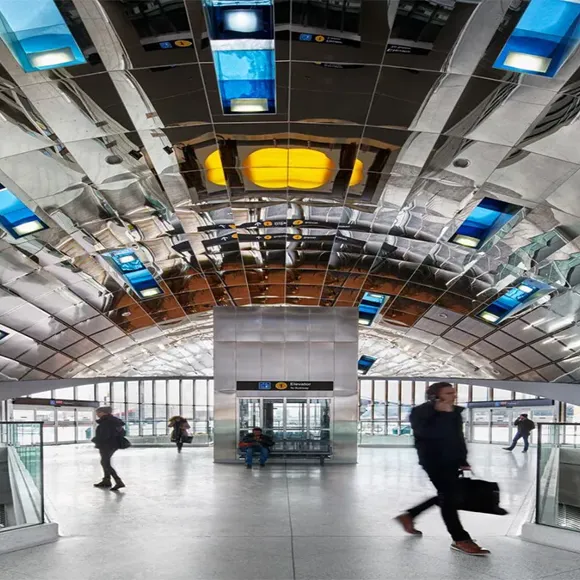
Concourses
Concourses, which connect the train platform to different modes or amenities, are key decision-making points for passengers. They should provide space to rest or pause while avoiding disruption to the flow of other passengers.
With the longer travel distances between street and platform of deep stations, the strategic placement of concourses can help divide up the customer journey. Mezzanines can ease the movement of people around deep, complex stations, especially interchange hubs.
Concourses that provide visual connectivity between levels can create a sense of openness and promote a sense of safety at subterranean depths.
Fulton Center
What was once a tangled network of nine subway lines is now a unified interchange station for one of the busiest transfer points in New York City. As lead consultant to MTA New York City Transit, Arup significantly improved the circulation of the Fulton Street subway station. We proposed the creation of a central atrium, which both serves to brings natural daylight into the concourse and aids intuitive navigation.
Learn more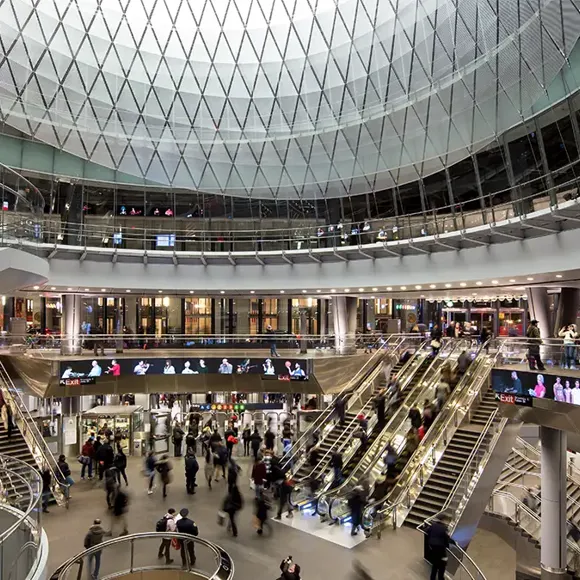
Pedestrian tunnels
Long tunnels are common in deep underground stations, especially interchange stations. With no visual continuity with the rest of the station, these tunnels can feel constricted and hazardous. Careful planning of access points can help avoid the need for long tunnels. If unavoidable, design solutions can include moving walkways to reduce fatigue, wayfinding signage to provide visual breaks, and good lighting.
Platforms
Platforms sit at the lowest depths of a station. Visual openness and sightlines to upper levels can ease the feeling of being deep underground and create a more comfortable environment. For those exiting the station, wayfinding and architectural features can help guide passengers along their journey and avoid congestion on the platform.
Vertical circulation
The extended travel distances of deep underground stations often result in fatigue. Escalators and elevators facilitate movement between station levels and serve as an accessible option for passengers with physical limitations. Vertical circulation elements that operate as an interconnected system can improve safety, reduce fatigue, and promote efficient movement through a station.
Escalators are effective for moving large numbers of people between levels. However, long runs of single escalators can affect a person’s perception of depth. Clear sightlines to the surface can help mitigate this. Ensuring reliability and providing redundancy of vertical transport is critical.
Elevators are essential to an accessible station journey. They should be easy to locate and integrated intuitively into routes rather than treated as secondary.
Stairs in deep stations should primarily supplement escalators and elevators. To avoid crowding, designing stairs to be wider can allow faster individuals to pass those moving more slowly. Enlarged landings can also offer rest without disrupting the flow of traffic. A switchback arrangement lends itself well to large landings and can help break up the journey.
Designing deep underground stations goes beyond the engineering and construction challenge of tunneling below a densely populated city. It requires close attention to addressing the needs of those who will use the station every day. When passenger experience is considered a priority from the outset, the outcome is an underground environment that feels safe, easy to navigate, and welcoming.
Insights
Explore more rail insights


Get in touch with us
If you'd like to speak to one of our rail experts about any of the issues raised on this page or a potential collaboration then please get in touch by completing the form.
